Thank you for making our grants possible!
Click on the sections below to see the grants we’ve sent so far this year (our financial year runs April 2025 – March 2026).
Further down, you’ll see all of the grants we sent since April 2024.
More information on how we spend money can be found in our Audited Accounts on the Charity Commission’s website and Impact reports (latest copy viewable here).
If you’d like to understand more about our funding priorities, take a look at our grant-making policy. Further guidelines on applying for a grant can be found here.
Grants 2026-2027
Ujung Kulon National Park, Indonesia
- £2,728.30 from the National Zoo & Aquarium in Canberra, Australia, was awarded to our partner ALeRT for work in for Ujung Kulon NP. The original intention was to use the funds towards a boat to increase patrol effectiveness, but then refocused – via discussion with the UKNP Park Director – to helping to cover additional rhino monitoring effort
Borana Conservancy, Kenya
- We sent £1,170 from miscellaneous restricted donations to pay Richard Hennery for five days’ consultancy for Mazingira Yetu during the period January-March 2026. Mazingira Yetu’s (MY) purpose is to: ‘Provide place-based, mutual, and holistic education focused on regenerative, action-based approaches, inspiring communities to take an active role in securing global ecosystem health.’ By engaging neighbouring communities, MY enhances local stakeholders’ (teachers, youth, adults) understanding of conservation and strengthens support for regenerative land stewardship. The key focus is safeguarding the long-term health of the Ewaso Nyiro ecosystem, both for local people and for keystone species like the black rhino. Programme participants take part in field trips to Borana Conservancy, where they experience a thriving landscape and engage in transformative education. These experiences cultivate regenerative thinking, equipping communities with the knowledge, skills, and motivation to actively contribute to conservation efforts
- We used £585 from misc. restricted donations to pay an education consultant for 2.5 days’ consultancy for Mazingira Yetu during the period April-June 2026
- Two grants – one of £935 donated by Andrew Dixon, the other of £9,350 from CHK Foundation – were sent for the 2026 operating costs of the Borana Mobile Clinic (BMC). The BMC is fashioned out of an old Land Rover and staffed by two nurses – one of whom specialises in teaching about nutrition and hygiene – and a driver. The project’s goal is to support the communities living in the areas surrounding Borana Conservancy to achieve happier, healthier lives as part of an ecosystem shared with wildlife and livestock; while its objective is to provide access for local communities, particularly those in remote areas, to health services including: family planning; HIV/AIDS awareness, counselling, and testing; antenatal advice; child immunisation programmes; deworming programmes; malnutrition screening; health lectures; sanitation advice; student support and counselling; basic healthcare; and the provision of drugs
- Another two grants ($4,000 from the Peter Pan Charitable Foundation on behalf of Mike and Molly Miller, and $500 from New Hampshire Charitable Foundation’s Ryder Life and Liberty Fund) were allocated to Borana Conservancy’s general operating costs
- £15,080 raised by participants in the 2025 ForRangers Ultra to establish a dedicated, year-round gym facility to strengthen ranger fitness, wellbeing, and operational effectiveness. Rangers play a critical frontline role in protecting wildlife and habitats within the Lewa-Borana Landscape (LBL), operating in physically demanding conditions across varied terrains and in all weather. Maintaining high levels of physical readiness is essential for effective patrols, rapid response, and personal safety. The proposed gym will provide functional training equipment to support strength, endurance, agility, and injury prevention, enabling rangers to train consistently, regardless of seasonal or weather constraints. By improving physical fitness, the project will enhance ranger performance and resilience, directly contributing to improved conservation and security outcomes. In addition, the facility will offer a shared space that promotes morale, teamwork, and motivation, reinforcing a sense of pride, professionalism, and wellbeing among its ranger teams
ForRangers, Kenya
- We sent $5,000 from ForRangers funds, thanks to a grant from March to the Top, for Local Ocean Conservation (LOC) in Kenya, to strengthen the welfare, safety, and operational capacity of frontline conservation rangers in Watamu, Kenya. LOC’s rangers are the backbone of the sea turtle conservation programme, responding to rescues, protecting nesting beaches, monitoring hatchlings, carrying out community outreach work, and safeguarding critical marine habitats. Their work is physically demanding and often undertaken in challenging coastal conditions. Specifically, the grant will pay for: the construction of new shower facilities, hygienic waste management systems, and a dedicated ranger meeting area; and will also pay for head torches and rechargeable batteries, rash vests, reef shoes, medical checks and training refreshers
- The other $5,000 from the March to the Top grant to the ForRangers initiative, was allocated to the Mount Kenya Trust, which provides the 41 members of its field teams with a facility to reimburse them for medical care for themselves and their teams, as well as for forest restoration monitors. In this way, MKT reduces financial barriers to healthcare for field staff and their immediate families, thereby preventing delays in seeking treatment and minimising the economic burden of unexpected medical expenses. The desired outcome is to maintain the health, well-being, and operational readiness of frontline conservation personnel, ensuring sustained field presence, improved staff morale, and uninterrupted delivery of conservation activities across the Mount Kenya ecosystem
- £7,410 raised by the ForRangers Ultra 2025 runners was awarded to Ole Naishu, which is situated between Borana Conservancy and Lolldaiga Conservancy in central Laikipia. It spans 30,000 acres and is part of a wider ecological network vital for migratory species. Conservation activities include the removal of invasive species like the cactus Opuntia stricta and implementation of rotational grazing programmes to promote rangeland health. The grant will be used to: Provide frontline rangers with durable boots and essential field equipment to improve personal safety, comfort, and operational readiness during daily patrols and extended field deployments; Equip ranger teams with GPS units and EarthRanger™-enabled mobile phones to improve navigation, communication, situational awareness, incident reporting, and coordination during operations; and Support ranger welfare and resilience during patrol operations through the provision of basic welfare items, including thermos flasks, that improve hydration, morale, and overall wellbeing while operating in challenging environments
- £3,721 from funds raised by the ForRangers Ultra 2025 runners was sent to the Taylor Ashe Antivenom Foundation / Watamu Snake Farm, which has established an internship programme designed to share their extensive knowledge of snakes in East Africa and promote awareness widely across Kenya with the dual focus of saving snakes and saving lives. Specifically, the grant will enable two rangers to complete a 4-week internship, and another eight rangers to complete a one-week internship at the Farm, to give them rangers hands-on experience in several aspects of snake management and conservation. Interns participate in educational workshops that focus on snake identification, behaviour, and habitats. This comprehensive training equips them with the knowledge necessary to address human-snake conflict effectively. It is essential for them to learn safe handling techniques and first aid procedures for snakebites, which are particularly important in areas where encounters with venomous snakes are frequent
- Another £3,721 from funds raised by the ForRangers Ultra 2025 runners was sent to the NgareNdare Forest Trust. The funds will be used to equip the 28 rangers with financial literacy skills for both individual and family development, and to motivate them by taking them on a learning trip to interact with rangers at the Reteti Elephant Sanctuary in Sera Wildlife Conservancy. Human-elephant conflict is common in Laikipia County, and it will be interesting for the NNFT’s rangers to see how the Sanctuary’s keepers interact with elephants under their care
- We awarded £3,721 raised by participants in the 2025 ForRangers Ultra for Lolldaiga Conservancy, split as follows: £2,000 four large, gas-powered boiler stoves for the ranger kitchen; £1,721 to buy boots, balls, training equipment and jerseys for Lolldaiga’s football team. The stoves will greatly aid in being able to cook substantial and preferred meals for the rangers and allow teams to reduce dependency on firewood along with associated hazards such as smoke. Good quality and efficient food preparation is important for ranger well-being, motivation, and successful operations in the field. And football – playing as well as watching it – a strong interest for many rangers. This grant will boost morale, strengthen team cohesion, create opportunities to engage with neighbouring conservancies through sport, and add enjoyment to a demanding work environment
Lewa Wildlife Conservancy, Kenya
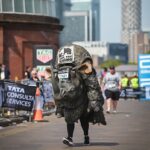
- In April 2026, Lewa’s Head of Anti-Poaching Unit, Edward Ndiritu, came to London to run the 2026 London Marathon in one of our iconic rhino costumes. His fundraising efforts were split between Save the Rhino and Lewa, and we were delighted to be able to send £193.12 plus $5,000 to Lewa. Edward is keen that the funds be used for rangers from Lewa to go on exchange visits with other field programmes, e.g. Namibia, to see how they work with the communities: monitoring, security, outreach programmes etc.
- We sent a further £205 raised by Lewa’s Head of Anti-Poaching Unit, Edward Ndiritu, who ran the 2026 London Marathon in rhino costume
- We awarded £14,925.73 raised by ForRangers Ultra 2025 runners to help improve ranger welfare on Lewa: £5,250 for day sacks; £3,969 for training apparel (shirts, shorts and socks); £3,984 for sneakers; and £1,723 for first aid boxes. Running kits and sneakers will support the physical fitness, agility, and readiness that ranger teams need for their roles, equipping them to perform effectively during patrols and field operations. Day sacks will provide a practical means of carrying equipment and supplies during patrols and fence maintenance duties. In addition, first aid boxes will be issued to each of the teams to ensure immediate medical response capability for injuries that may occur within their stations and during field activities
Ol Jogi Conservancy, Kenya
- We sent a grant of £15,665 from Yorkshire Wildlife Park’s WildLife Foundation, together with another £110 received in miscellaneous restricted donations, to Ol Jogi Conservancy in Laikipia County Kenya, to cover the costs of a vital rhino tactical refresher course. This training course ensures rangers are fit and fully acquainted with all the latest protocols and the use of vital equipment, improving their ability to respond quickly and effectively to any potential threats to rhinos or other wildlife on the Conservancy. Daily patrols, supported by EarthRanger™ technology, allow for continuous monitoring of rhino movements and wellbeing, verification of habitat use, and early detection of any incidents, reducing the risk of poaching, injury, or disturbance
- We awarded £14,884 raised by ForRangers Ultra 2025 runners to buy rations for Ol Jogi’s ranger team. These packs sustain the ranger teams, helping to keep them strong and fit. They contain something tasty for them after long days in the field. The distribution of these rations will maintain morale and may even help to prevent rangers from wanting to conspire with criminal syndicates
Ol Pejeta Conservancy, Kenya
- Thanks to participants in the 2025 ForRangers Ultra, we were able to award £14,884 to Ol Pejeta to strengthen and motivate the high-performing ranger team equipped to sustain Ol Pejeta’s zero-poaching record and enhance wildlife protection across the Conservancy by improving the wellbeing of ranger teams operating in the field, and enhancing the ranger teams’ wildlife monitoring and data collection capacity. Specifically, the grant will pay for: tents used by rangers while deployed in the field; camp beds; binoculars; and camera-traps positioned strategically along key wildlife corridors and movement routes within the Conservancy
Save the Rhino Trust, Namibia
- Thanks to a grant from Krefeld Zoo, we were able to send €14,025 to Save the Rhino Trust: €9,825 to be used for vehicle fuel (the costs have increased sharply since the beginning of the war in the Middle East); and €4,200 for fixed-wing flying time. Zoo Krefeld previously paid for Operations Manager Andrew Malherbe to train for and obtain his Private Pilot’s Licence, which has proved extremely valuable for rhino monitoring in remote areas, and for supporting dehorning operations
- We were very pleased to be able to send £14,702.18 raised by participants in the “Cycle for Survival” bike ride through the Kunene Region of Namibia, organised in aid of Save the Rhino Trust. A third (£4,900) will be used to improve the ablutions facilities in SRT’s base at Ugab; £2,810 will be used for security operations in Eroku during the Christmas holiday season; £1,410 will be used to support Otjizeka School; and the remaining £5,582.18 will be used to help cover vehicle fuel and maintenance costs (diesel costs have increased by c. 40% since the beginning of 2026)
- We sent £17,154 raised by the Desert Heart party, which has been allocated towards vehicle fuel and maintenance costs; any surplus will be used to buy rations for SRT’s trackers
- $1,500 from Anita Cohen and Lynn Witt, and another £832.02 received in miscellaneous donations, was sent to pay for rations for rangers based in Tsumkwe. With SRT’s support, they are responsible for monitoring rhinos in Nyae Nyae Conservancy, in the north east.
Hluhluwe-iMfolozi Park, South Africa
- We sent a series of grants to Wildlife ACT for Y3 of its project in HiP entitled “Hluhluwe-iMfolozi Park Rhino Monitoring and Security”: €9,350 from Kiezebrink Focus on Food; $12,000 from the McClintock Family Charitable Fund; €3,740 from Zoo de Montpellier – Parc de Lunaret; and £1,941.68 from Zoo Zlin. This Project aims to address two priority needs in HiP: firstly, to tackle the poaching threat by increasing and improving the deployment and maintenance of security-focused camera traps throughout the Park; and secondly to transform management understanding of the black and white rhino populations’ performance, by increasing the level of monitoring at individual animal level. Such monitoring is vital for understanding breeding performance and constraints (such as density dependence) and for making recommendations for animals that might be translocated out of the Park to establish new rhino populations elsewhere in KZN, South Africa and wider sub-Saharan Africa
- A further donation of €5,285 from Ales Weiner was also sent to help cover the costs of Y3 of the rhino monitoring and security project
North Luangwa National Park, Zambia
- We sent £4,709.47 received in Gift Aid on donations made to Save the Rhino for North Luangwa in 2025; the funds will be put towards general Park operating costs
Lowveld Rhino Trust, Zimbabwe
- We paid £33.99 from miscellaneous restricted donations to pay for the renewal of LRT’s website domain name for the year starting 1st April 2026
- We spent £820 from Dublin Zoo’s grant to pay rhino monitoring data entry costs incurred by LRT during the period September 2025-May 2026. LRT is a Zimbabwean-registered trust that undertakes rhino conservation activities in the Lowveld region of Zimbabwe. From the outset, LRT has placed emphasis on developing large populations (>100 rhinos in each) that achieve high breeding rates and maximum genetic diversity, within areas of suitable habitat that show long-term economic viability in their wildlife-based land-use. LRT encourages performance-based conservation financing arrangements, equivalent to international payments for ecosystem services, using rhino population trends as proxy indicators for the natural capital that is conserved in these areas for the world as a whole. Such arrangements have funded LRT’s community awareness programme through inputs to local schools, as well as some rhino security inputs
- £9,000 from Dublin Zoo’s annual grants was awarded to help cover the cost of LRT’s school inputs for its community programme, and the field expenses of its part-time Community Coordinator. LRT incentivises local communities to support rhino conservation by providing textbooks, exercise books and other inputs to schools in ways that reinforce the communities’ understanding of rhinos and their conservation needs. The annual inputs are calibrated according to the rate of rhino population growth in the adjoining Bubye Valley Conservancy (BVC), with a baseline level of support of $25,000 per year spread over the beneficiary area, to which a bonus is added for every percentage of annual population growth above 0%. Fifty-five primary schools are supported in a zone of about 10km around BVC. However, the engagement goes beyond the schoolchildren, as LRT’s Community Coordinator sets up meetings with schoolteachers and parent groups to ensure that they understand that the basis of this programme is to provide rhino-based support to the community as a whole, by helping them with one of their primary needs (education) and to thereby stimulate their roles in rhino conservation such as reporting poaching gangs
KPMG, South Africa
- We sent $1,294.11 (ZAR 20,840) from The Woodtiger Fund to pay KPMG for continuing work (January-March 2026) on Project Blood Orange: drafting charge sheets, and litigation support for the National Prosecuting Authority of South Africa
- We also awarded a total of £6,931.65 (£6,517.58 from the UK Government through the Illegal Wildlife Trade Challenge Fund, and £414.07 from our own core funds) to KPMG for continuing work (January-March 2026) on the public-private follow-the-money investigation into a rhino-horn-trafficking syndicate in South Africa
- $2,468.12 (ZAR 39,376.65) from The Woodtiger Fund paid KPMG for continuing work (April-June 2026) on Project Blood Orange: drafting charge sheets, and litigation support for the National Prosecuting Authority of South Africa
- £48,015.39 (ZAR 1,025,191.09) from the Uk Government through the Illegal Wildlife Trade Challenge Fund paid KPMG for continuing work (April-June 2026) on the public-private follow-the-money investigation into a rhino-horn-trafficking syndicate in South Africa
- We paid a total of £1,615.69 from IWTCF to pay for the cost of a flight for SRI’s CEO, Dr Jo Shaw, to South Africa to meet the project team and participate in the Mid-Term Review of the project, as required by Defra
uMkhuze Game Reserve, South Africa
- We sent €4,939.61 from FONDATION Le PAL NATURE to pay for field ranger and remote sensing equipment: 10 tactical torches and canvas backpacks; seven camera traps, eight metal security cases, 10 memory cards; five lithium batteries amd chargers for remote sensing; and 20 further rechargeable batteries for law-enforcement-focused camera traps
- We were delighted to be able to send £10,339, donated by the donors to and champions of the April 2026 Big Give EarthRaise appeal, for a project entitled “Protecting endangered rhinos and their habitats”. Funds from the appeal are being used to provide vital communications equipment: six digital radios for the Reserve’s vehicles (approx. £3,000); and for a new 15-metre mast to be built at Mshopi outpost for improved network and backhaul capacity (approx.. £2,800). The rest will be used to help cover vehicle fuel and maintenance costs. The grant will help the team to carry out systematic patrols, population monitoring, and law-enforcement operations more efficiently, improving their ability to detect and respond to threats, and to maintain high sighting rates and monitoring of rhinos. With the populations of rhinos protected, the animals can continue to breed, grow in number and be used to supplement populations in new areas from which they have been extirpated
- We sent a further £304.38, donated by donors to and the Champions of the April 2026 Big Give EarthRaise appeal, which raised funds for “Protecting endangered rhinos and their habitats”. Funds from this appeal will be used to provide vital communications equipment and to help pay for fuel and maintenance for the Reserve’s vehicles
- A grant of £1,543.61 from funds received from West Midland Safari Park, to cover the salary of uMkhuze’s Ops Room Operator for the months of June, July and August 2026. WWF-BRREP will be able to continue funding this position thereafter
African Rhino Specialist Group – Pachyderm
- We sent $3,000 (from a total donation of $11,284.53), from The Pachyderm Journal Fund established by the estate of Esmond Bradley Martin and managed by the Royal Geographical Society as sole Trustee, towards the production of issue 67 of Pachyderm. Pachyderm is an international, peer-reviewed journal, published online at https://pachydermjournal.org/. Its main focus is African elephant and African and Asian rhino conservation and management in the wild. It is also a platform for dissemination of information concerning the activities of the African Elephant, the African Rhino, and the Asian Rhino Specialist Groups of the IUCN Species Survival Commission (SSC)
- We sent $1,300 from Save the Elephants towards the production costs of issue 67 of Pachyderm
Ujung Kulon National Park, Indonesia
- Thanks to a grant from our sister non-profit organisation, Save the Rhino International Inc., we sent the second instalments for the project entitled “Park Resilience Plan for Ujung Kulon National Park”: $13,656 to Conservation Synergies and $7,531 to a local NGO, Integrated Rimba Lestari Alliance (ALeRT). The project goal is to support the long-term sustainability of Ujung Kulon National Park and capacity to achieve its Javan rhino conservation objectives by building the organizational resilience of the Park’s management authority and its key partners. The approach uses social research to understand the dynamics and risks, then works with park staff at all levels to co-design practical actions that address priority drivers and establish implementation systems at organizational, team and individual levels
Hluhluwe-iMfolozi Park, South Africa
- We made further payments to Tim Kuiper ($6,749.59) and Vanessa Duthe ($2,035.53) for their work on Project FIRE-HiP: “Evaluating rhino protection interventions in Hluhluwe-iMfolozi Park: cost, effectiveness and lessons learnt”, thanks to a grant from Wildlife Conservation Network’s Rhino Recovery Fund. The resulting report will be published in August and is intended to inform future investment by donor agencies into rhino conservation efforts by EKZNW in HiP, other rhino reserves in KZN, and beyond
- We paid £215.56 from miscellaneous restricted funds to cover the costs (flight, hotel) of Dr Tim Kuiper’s visit to HiP in August, to present the findings of the Project FIRE to Ezemvelo KZN Wildlife’s CEO
- We paid a further SAf-HiP South Africa White and black Aug-26 £221.63 Technical support 5 $300.03 from core funds for 3rd instalment (total $1,859.94) due to Tim Kuiper for Phases 3 and 4 of the project entitled “Evaluating rhino protection interventions in Hluhluwe-iMfolozi Park: cost, effectiveness and lessons learnt”
- SAf-HiP South Africa White and black Aug-26 £381.00 Technical support 5 £381 from misc res funds for 3rd instalment (ZAR 8,250) due to Vanessa Duthe for Phases 3 and 4 of the project entitled “Evaluating rhino protection interventions in Hluhluwe-iMfolozi Park: cost, effectiveness and lessons learnt”
- SAf-HiP South Africa White and black Aug-26 £420.07 Technical support 5 Remaining $568.67 from Wildlife Conservation Network’s Rhino Recovery Fund grant of $19,993.98 for 3rd instalment (total $1,859.94) due to Tim Kuiper for Phases 3 and 4 of the project entitled “Evaluating rhino protection interventions in Hluhluwe-iMfolozi Park: cost, effectiveness and lessons learnt” Wildlife Conservation Network’s Rhino Recovery Fund
Grants 2025-2026
Sumatran Rhino Sanctuary, Indonesia
- We sent a series of grants totalling €27,721.26 to the International Rhino Foundation, to help cover the annual running costs of the Sumatran Rhino Sanctuary, based in Way Kambas National Park in Sumatra, Indonesia. With only 34-47 Sumatran rhinos remaining, urgent action is needed to save the species from extinction. The SRS is a semi-wild facility that currently houses 10 rhinos, providing round-the-clock care for one of the species’ few breeding populations. Since 2012, the Sanctuary has celebrated five births, offering hope for the future of Sumatran rhinos: Andatu (born in 2012 to Ratu), Delilah (born in 2016 to Ratu), Sedah Mirah (born in 2022 to Rosa), Indra (born in 2023 to Delilah) and Anggi (born in 2023 to Ratu). Our thanks to the following donors: Tallinn Zoo – Fondation Lutreola (€6,415); Zoo Hodinin (€1,050.94); Dublin Zoo (€4,675); Odense Zoo (€10,285); and West Midland Safari Park (£4,590.02)
Borana Conservancy, Kenya
- We used £1,872 from misc. restricted funds for Mazingira Yetu, the conservation education programme run by Borana Conservancy for neighbouring primary and secondary schools and community groups; specifically to pay consultant Richard Hennery for his time evaluating the progress of MY, mentoring Mazingira Yetu staff, and developing recommendations for the programme’s future direction
- Thanks to Bently Foundation, we were able to send $10,500 for the repair of the predator-proof fence that surrounds Borana Conservancy
- We sent $5,000 donated by Steve Kemler to help cover the 2025 running costs of Mazingira Yetu
- Another £936 from misc. restricted donations was used to pay Richard Hennery for his consultancy for Mazingira Yetu during the period April-June 2025
- $20,000 from funds raised by the participants in the 2024 ForRangers Ultra was used to pay for new uniforms of Borana’s rangers: 178 jungle-green shirts, trousers and T-shirts; 89 jungle-green jackets, belts, bush hats, sweaters and waterproof trousers; 267 pairs of socks; and 40 sleeping bags for Borana’s Non-Police Reservists
- £30,400 from the Rothes Charitable Trust was sent to help cover Borana’s general operating costs during 2025
- We sent €18,700 from the Parc Zoologique de Paris to help cover the operating costs of Mazingira Yetu, the conservation education programme, during 2025. Mazingira Yetu’s (MY) purpose is to: ‘Provide place-based, mutual, and holistic education focused on regenerative, action-based approaches, inspiring communities to take an active role in securing global ecosystem health.’ By engaging neighbouring communities, MY enhances local stakeholders’ (teachers, youth, adults) understanding of conservation and strengthens support for regenerative land stewardship. The key focus is safeguarding the long-term health of the Ewaso Nyiro ecosystem, both for local people and for keystone species like the black rhino. Programme participants take part in field trips to Borana Conservancy, where they experience a thriving landscape and engage in transformative education. These experiences cultivate regenerative thinking, equipping communities with the knowledge, skills, and motivation to actively contribute to conservation efforts
- We sent £425.41 from misc. restricted dons to pay Richard Hennery for flights and a visa for his visit to Borana in Nov 2025 to mentor James Munga, Education Centre Officer, when they’ll be focusing on thematic analysis techniques – which should further improve the monitoring and evaluation of the programme’s impact – and developing some more community engagement activities.
- A grant of $5,000 from the Donald L. Barnes Foundation was awarded to Borana Conservancy, which is managing the purchase of a new patrol vehicle for rangers working in the IL MAMUSI Community Forest Association. At the moment, the rangers patrol on foot or by motorbike. A dedicated vehicle will: Protect endangered wildlife species, by securing the adjacent Mukogodo Forest as a corridor and strengthening protection for key wildlife species such as African elephant, wild dogs and rhinos thriving in neighboring Borana, Lewa and Il Ngwesi; Expand patrol reach, enabling access to remote areas that are currently unmonitored; Cut response times to community alerts and illegal activities; Enhance ranger welfare by improving safety, morale, and operational efficiency; Demonstrate to communities and partners that rangers are well-equipped to safeguard people and wildlife alike; and Speed up implementation of the Participatory Forest Management Plan
- A donation of $1,000 from Dave & Mona Taliaferro was sent to help pay for the helicopter costs incurred in rescuing Mumu’s orphaned calf. Mumu died after she fell off a cliff, presumably having been chased by an overly aggressive bull. The calf was safely transferred to the Sheldrick Wildlife Trust’s animal orphanage in Nairobi, where it will be hand-reared until it can be released into the wild
- A total of $17,740 from the Anna Merz Rhino Trust covered several needs at Borana: $10,000 was sent to pay for two Pulsar Merger Thermal Imaging Binoculars; another $2,000 bought 20 x LT10 solar ear tags, to aid rhino monitoring efforts; and the remaining $5,740 will buy the 10 x MOTOTRBO R2 portable two-way digital radios used by Borana’s rangers
- We sent $5,469.66 to Borana Conservancy: $1,469.66 from Elizabeth Childrey towards the 2026 running costs of Mazingira Yetu, Borana’s conservation education programme; and $4,000 from Joe Kenny and Jennifer Siegel, who donated in honour of their friends Patrick and Peter, who rode the 10-4 in February 2026, for Borana’s general operating expenditure
- We also sent £8,415 donated by Tim and Bev Moulding for Borana’s ongoing operating costs. By way of thanks, Borana is naming one of its white rhinos “Beverley Anne”, after Tim’s wife. Rhino ID2688 is two years and eight months old, has a very calm temperament, and is always seen with another older female, both having been pushed away by their mothers following the birth of subsequent calves. They have established their home range in the northern part of Borana and are regularly seen near the Arijuju lugga
ForRangers, Kenya
- We sent $10,000 from ForRangers’ funds to help cover the costs of the African Ranger Congress (ARC), which is being held in September 2025 at Lewa Wildlife Conservancy in Kenya. The ARC has been a powerful gathering for African rangers to unite, share experiences, and advocate for their profession. Since the first ARC in South Africa in 2018, which birthed the landmark African Ranger Declaration, and the follow-up congress in Kasane, Botswana in 2022, when nearly 100 rangers from 12 countries gathered, these events have made lasting impacts. Now, in 2025, the third ARC in Kenya will build on this momentum, offering a platform to tackle challenges, strengthen partnerships, and amplify Africa’s voice in the global ranger community
- We sent £11,400.62 from funds raised by the ForRangers initiative, including runners participating in the 2024 ForRangers Ultra, to contribute to the Game Rangers Association of Africa’s life insurance scheme; and another £31,280.94 to cover WIBA (Work Injury Benefits Act) contributions for life insurance for rangers working in Kenyan conservancies
- £1,800 from ForRangers funds to pay for representatives from Strong Ranger Resilience to attend the European Ranger Conference. SRR has previously worked with rangers at Ol Pejeta, Borana and Lolldaiga, and the ForRangers initiative is keen to see the work expanded in conjunction with the GRAA. In the event, the delegates did not receive their visas in time to travel to Romania for the conference, and £4,000 of the original grant of £5,800 has been returned
- £5,676.66 from the ForRangers initiative to the Taylor Ashe Antivenom Foundation, which will pay for: providing a small kitchen and dining area, access to drinking water, and a changing area with shower and loo, which are critical to maintain the physical and mental well-being of the team; a leadership trip to the Kakamega Forest would provide an invaluable opportunity for professional development, fostering teamwork and enhancing their guiding and skills in guest relations; and covering health insurance benefits would ensure that the rangers receive necessary medical care, further enhancing their sense of security and well-being while working in often challenging field conditions
- £5,679.67 from the ForRangers initiative for Local Ocean Conservation Kenya, which will pay for: equipment for turtle nest monitors and field officers (including torches, laptops, phones, batteries etc.), and improvements to the LOC’s monitors’ living quarters and kitchen utensils
- £5,685.26 from the ForRangers initiative for Association of Wildlife Conservancy Rangers in Kenya, to pay for the salary (11 months) of the new position of Community Wildlife Rangers Coordinator and for a laptop. The Coordinator will facilitate the implementation of AWCRK’s strategic plan, expand membership, enhance fundraising efforts, and promote partnerships among stakeholders for the benefit of community wildlife rangers
- £3,814.17 from ForRangers’ funds for the Ngare Ndare Forest Trust, to support ranger welfare on two fronts: firstly, to equip all of them with new uniforms including camouflage shirts, trousers and hats, military boots and socks, and stable belts; and, secondly, to equip the rangers with drop-leg medical pouches and restock the existing First Aid kits for enhanced medical response
- £7,482.51 from Griffin International, via the ForRangers initiative, for the gym for rangers at Mugie Conservancy in Laikipia, Kenya
Lewa Wildlife Conservancy, Kenya
- We sent $12,471 from Bently Foundation to be used for the replacement of uniforms, including boots and jackets, for 20 of Lewa Wildlife Conservancy’s rangers
- A total grant of $26,000 from the Anna Merz Rhino Trust was awarded to cover several needs: $20,000 will be used to pay for uniform sets for 32 rangers (each set includes uniforms, waterproof jackets, waterproof trousers, and trainers); $5,000 for a Leadership training course for 2 x supervisors at the Kenya School of Adventure and Leadership (KESAL) for 12 days; and $1,000 will cover the cover the cost of a Basic in-house refresher course for 10 rangers over 10 days. The course will be facilitated by Lewa rangers who have already completed basic training.
- We sent £26,372.53 from funds raised by participants in the 2025 ForRangers Ultra to pay the Game Rangers’ Association of Africa for life insurance of 1,807 rangers across Africa, for the calendar year 2026
- We were very pleased to send £18,538.21 to Lewa Wildlife Conservancy (one-third of the £55,614.23 raised for K9 units in Africa, thanks to grants received from SRI Inc., the Scott and Jessica McClintock Foundation & the Reed Foundation, which acted as matching funds for the donations to our 2025 Big Give Christmas appeal, “Paws on patrol”. The funds have been split equally between K9 Units based in Lewa Wildlife Conservancy in Kenya, the North Luangwa Conservation Programme in Zambia, and Hluhluwe-iMfolozi Park in South Africa
Ol Jogi Conservancy, Kenya
- We awarded £15,941.34 ($20,000) from funds raised by runners participating in the 2024 ForRangers Ultra, to pay for ranger ration packs to provide essential nutrition for proper sustenance and energy levels for field operations, and to boost ranger morale by providing quality food items. The rations include rice, sugar, tea leaves, cooking oil, maize flour, biscuits, corned beff, tinned and fresh fruit and vegetables, milk, beef/mutton, and salt
- $10,347 from Bently Foundation was also sent to cover the cost of rations for Ol Jogi’s rangers
- $1,842 from the €5,000 donation by Erlebnis Zoo Hannover was used to repair Ol Jogi’s Veterinary Clinic’s sustainable power system; the batteries were becoming obsolete and were causing shortages
Ol Pejeta Conservancy, Kenya
- We sent a total of $20,000 from funds raised by runners participating in the 2024 ForRangers Ultra: $579), to pay for three pairs of binoculars to be used by rhino monitors; and $19,421 to pay for two 10-person tents, used for ranger training programmes; seven 4-person field unit tents, used by patrol teams when on deployment; and 48 camp beds
Sera Wildlife Conservancy, Kenya
- A grant of $30,000 from the Anna Merz Rhino Trust was split as follows: $3,488 a refresher training course for rhino monitors and anti-poaching teams; and $26,512 for rangers’ essential equipment, which includes camping gear (roll mats, sleeping bags, mosquito nets and flysheets), digital cameras, GPS, handset radios and a research laptop. These are critical for effective patrols and monitoring efforts, communication and research work, while the refresher training course will improve data quality, and enhance the field effectiveness, safety and morale of the teams by updating skills and understanding
Ministry of Environment, Forestry and Tourism, Namibia
- $3,905.62 (N$68,712.50) from Bently Foundation was used to pay for 5 x air-ground Icom radios, used whenever fixed-wing or rotary aircraft need to communicate with ground crews during rhino operations
- Two grants from the legacy from Ania Wanda Wasilewski paid for: prints of rhino images for MEFT’s headquarters in Windhoek (£269.34); and a laptop for the Ops room in Waterberg Plateau Park to facilitate rhino monitoring data management (£1,141.58)
- A grant totalling $12,000 from the Scott and Jessica McClintock Foundation enabled the following purchases: $1,700.39 for repairs to the veterinarian’s vehicle prior to the block count scheduled to take place in Etosha National Park; $2,624.79 for 3 x tablets on which to record monitoring data during the Etosha NP block count; and $1,337.83 to construct a second LoRaWAN tower in Nyae Nyae Conservancy’s Buffalo Camp. This will provide the Camp with better coverage
- Bently Foundation’s grant for MEFT enabled the following purchases / payments: $618.49 from the Bently Foundation’s grant for repairs to the new rhino recovery vehicle following dehorning operations in Waterberg Plateau Park; $572.57 for fuel for the Ministry’s capture truck, for operations to retrieve four black rhino that had escaped from a custodian property and Etosha NP; and $1,143.07 for fuel for the Chief Conservation Scientist, so that he can provide replacement satellite units in Khaudum NP and participate in the Etosha block count
- We sent $731.12 to pay Southern Communications & Equipment for repairs to the 5 x air-ground Icom radios for MEFT, used whenever fixed-wing or rotary aircraft need to communicate with ground crews during rhino operations. $642.06 came from Bently Foundation and the remainder from the Scott and Jessica McClintock Foundation
- Another $301.21 from the Scott and Jessica McClintock Foundation paid for protective eye-wear for the observer during the 2025 Etosha block count
- We sent two payments from the Scott and Jessica McClintock Foundation’s grant for MEFT: $1,123.67 from to pay a consultant for his assistance with entering data during the Etosha National Park Block Count, which is carried out every 2 years; and $481.54 to pay for 1 iridium satellite horn pod and bracelet, plus 6 months’ service fees, to track a recently translocated rhino
Save the Rhino Trust, Namibia
- We sent $24,853 from Bently Foundation: $15,653 to be used for trackers’ salaries, and $9,200 for fuel for the vehicles used in field deployments
- We were able to send a grand total of £13,372.12 to help pay for electricity costs and the installation of wifi at Maigoha!, SRT’s main field base, rations and vehicle fuel and running costs, and administrative expenses for the Trust, thanks to donations from The Cross, Vanessa Buxton, the Rathbones Trust, Camilla St John Warre, and other misc. restricted donations received for SRT
Hluhluwe-iMfolozi Park, South Africa
- $15,005 from Bently Foundation was sent to help pay for the annual replacement of basic uniforms for 130 field rangers
- We sent three grants to Wildlife ACT for Y2 of its project in HiP entitled “Hluhluwe-iMfolozi Park Rhino Monitoring and Security”: $6,762.33 from Zoo Zlin; £1,845 from Rubrik Germany; and €4,000 from Zoo de Montpellier – Parc de Lunaret. This Project aims to address two priority needs in HiP: firstly, to tackle the poaching threat by increasing and improving the deployment and maintenance of security-focused camera traps throughout the Park; and secondly to transform management understanding of the black and white rhino populations’ performance, by increasing the level of monitoring at individual animal level. Such monitoring is vital for understanding breeding performance and constraints (such as density dependence) and for making recommendations for animals that might be translocated out of the Park to establish new rhino populations elsewhere in KZN, South Africa and wider sub-Saharan Africa
- We sent £2,814.22 plus $3,244.67 raised from donations to our spring 2025 “Step up for Rangers” appeal. These funds will be used to buy canvas boots for the Park’s rangers and fenceline team, at c. R540/pair. These light boots ensure field rangers can continue to patrol the reserve with boots that are safe and light, and are not adversely effected by water when crossing rivers and in rain. When boots get old, the rubber gets soft which can lead to acacia type thorns penetrating boots into the foot, worn out boots also effect the capability of staff to walk long distance and do the field work they are supposed to do. Support in this regard will go a long way in ensuring staff are kitted with comfortable, light and reliable footwear for them to perform their duties. Any surplus funds will be used to buy socks
- We sent €14,025 from Stichting Wildlife to complete the funding for Y2 of the rhino monitoring and security project; the surplus will start the fundraising effort for Y3
- £9,350 from the CHK Foundation for the Borana Mobile Clinic was sent to help cover operating costs during the calendar year 2025
- £702 from miscellaneous restricted donations was used to pay Richard Hennery for 3 days’ consultancy for Mazingira Yetu during the period July-September 2025; and another £3,276 for 14 days’ consultancy for Mazingira Yetu during a site visit in November 2025. Working with the MY team (James, Jedidah and John), they: developed a house style for reporting agreed and drafted (structure, visuals, quotes, finance notes, consent/privacy); built capacity for survey design; built a Code Book & Code Table from predicted and real answers and established a simple drop-down coding workflow in Google Sheets; ran cycles of coding → themes → quick counts on Grade 6 items, and practised creating suitable charts; adopted a 4-piece findings formula (Theme → Stat → Quote → So-what) and produced model paragraphs for different audiences; developed a new community engagement activity, a “What if walk”; documented progress in the MY garden; drafted the 2026 budget; and developed a concept for an income-generating gap-year programme
- A further £176.54 and $425 raised from donations to our spring 2025 “Step up for Rangers” appeal was sent to buy socks for the Park’s rangers and fenceline team
- £7,190.10 from the Ernest Kleinwort Charitable Trust was awarded for the repair and replacement of small items of equipment across all five Sections of the Park
- €14,960 from Réserve Africaine de Sigean, €935 from Conservacion Oasys, and €270 received in miscellaneous donations were allocated to year 3 (calendar year 2026) of the rhino monitoring and security project in HiP
- £8,547.00 from Colchester Zoo – Action for the Wild, together with £641.07 from misc. donations, was sent to pay for 108 sets of camouflage uniform, expected to cost a total of ZAR 205,200. Keeping the Park’s rangers suitably equipped and motivated is a high priority
- €4,675 from WOW CONSERVATION (Parc de Thoiry, Safari de Peaugres and Zoo Santo Inacio), together with €2,805 from Zoo de la Boissière du Doré, was sent to Hluhluwe-iMfolozi Park for year 3 (calendar year 2026) of the rhino monitoring and security project
uMkhuze Game Reserve, South Africa
- $21,315 from Bently Foundation was sent to pay for the annual replacement of uniforms for 75 field rangers, including boots and jackets
- £2,990.75 and $3,669.67 raised from donations to our spring 2025 “Step up for Rangers” appeal. The funds will be used to pay for: 2 x K9 Garmin collars and trackers; 2 x Garmin handheld ground-to-air radios; 8 sets of webbings; 200 x ready-to-eat ration packs; 2 pairs of night-vision monoculars; and a HikVision camera for monitoring one of uMkhuze’s gates
- £6,460.90 from The Ernest Kleinwort Charitable Trust was awarded to buy new tyres for uMkhuze’s fleet of vehicles
- A grant of $19,737 from the Anna Merz Rhino Trust was split as follows: $14,483 for the operating costs for the Foxbat light aircraft, used for rhino monitoring and aerial surveillance in the event of an incursion; and $5,254 for 5 x fridges, freezers and gas stoves for field rangers’ outposts
- €14,131 from Wildlands Nature and Education Fund was sent to cover the salary of uMkhuze’s Rhino Monitor for the 12-month period April 2026-March 2027
North Luangwa Conservation Programme, Zambia
- Thanks to a very generous donation by Peter and Birgitta Lawrence, as well as smaller ones from Jonathan Bosley and via our 2024 World Ranger Day appeal, we sent a total of £20,573.99 to NLCP. This paid for several things as follows:
- £1,400 to improve communications: 2 x ground-air radios @ £450 for teams on the ground and the helicopter and fixed wing during rhino operations; and £500 for a base station radio located at the picket camp being used by commanders, so they can get daily feedback from the teams in the ground and, in turn, report to management
- £6,000 for the fence-line and fence-line team: The rhino sanctuary fence needs constant maintenance, such as replacing broken fencing wire, insulators, strainers, bobbins etc., as well as painting rocks to make the fence more visible for the rhino and other animals. Funds will be used to purchase spares and paint. Some of the Fence Line Unit (FLU) pickets are in need of some maintenance, which also increases morale
- £2,300 to equip a 4WD with a 6,000-litre capacity and high-pressure water-pump. This will help the Rhino Monitoring Units to tackle wildfires, which are a big problem in North Luangwa and Zambia generally
- One of FZS’ staff attended school in Germany this year and received a grant to work on the impact of the rhino sanctuary fence on other animal species. NLCP has designed an app that will assist the Fence Line Unit (FLU) with monitoring more intensely the fence line to see what is happening. The FLU commander needed a computer @ £1,300 to assist with downloading all the data to be loaded into the database
- £2,500 for more Sigfox bracelets and horn implants to be deployed on rhinos, to improve tracking, during the rhino operations planned for September
- £7,053.99 was sent to be used to cover the cost of emergency retrievals of any rhinos that break out of the rhino sanctuary. The last time such an operation was needed, the helicopter alone cost $6,000
- Another £18,538.21 from our 2025 Big Give Christmas appeal, “Paws on patrol”, was sent to the North Luangwa Conservation Programme in Zambia
Lowveld Rhino Trust, Zimbabwe
- We sent £390 from misc. restricted donations to cover the Lowveld Rhino Trust’s rhino-monitoring costs, to pay for work from February to April 2025 inclusive on inputting rhino-monitoring data
- We paid £30.99 from misc. restricted funds to renew LRT’s website domain name for the period April 2025-March 2026
- We paid several more invoices on behalf of the Lowveld Rhino Trust, thanks to renewed grants from Dublin Zoo: £650 for rhino monitoring data entry costs incurred by LRT during the period April-September 2025; and other £350 for more rhino monitoring data-related costs; and £80 for the management of LRT’s website, from October 2024-October 2025 Dublin Zoo
Gunung Leuser National Park, Indonesia
- We sent £16,334.97 and €7,480 to Forum Konservasi Leuser in Indonesia for a project entitled “Vital support to Wildlife Protection Teams patrolling Sumatra’s Leuser Ecosystem to monitor and protect Critically Endangered wild Sumatran rhinoceros”, to help pay the salaries & benefits, travel & operational costs of and equipment for one of FKL’s 38 Wildlife Protection Teams during the 12-month period April 2026-March 2027. Our thanks to all the donors who made these grants possible: miscellaneous donations (£129.97); an anonymous donor (£5,000); the Betty Lawes Foundation (£3,725); The Marjorie Coote Animal Charity Trust (£2,805); the Simon Gibson Charitable Trust (£4,675); and Ales Weiner (€7,480)
Big Life Foundation, Kenya
- We sent £5 from a misc. donation to Big Life Foundation for its work monitoring and protecting the small black rhino population in the Chyulu Hills National Park, which lies to the north of Tsavo West
ForRangers, Kenya
- $20,000 from a donor who wishes to remain anonymous for the new mounted patrol unit based at Mugie Conservancy in Kenya, to be used to build and equip the main camp. With a large area and hilly terrain, vehicle and/or foot patrols would be difficult; horseback patrols will be both cheaper and more effective
Lewa Wildlife Conservancy, Kenya
- $20,000 raised by the 2024 ForRangers Ultra runners was sent to enable Lewa’s Anti-Poaching Unit (APU) to significantly increase its surveillance capacity by supporting the necessary licencing and training costs for the use of five drones purchased in 2024. Lewa currently owns five drones, which are an essential asset for the effective aerial surveillance of the Landscape. The drones are used for the following purposes: mitigating human-elephant conflict; routine animal patrols; searching for illegal activities (charcoal, logging, poaching); locating fires; emergency rescue services; and animal counts. The grant will cover the entirety of 2025, including ROC support for five drones and five RPL pilots, LWC RPL pilots onboarding fees, Kenya Civil Aviation (KCA) fees, and annual refresher training course fees
Ol Jogi Conservancy, Kenya
- The remaining £2,891.05 from Erlebnis Zoo Hannover’s donation of €5,000 donation was allocated to Ol Jogi’s canine unit, for training, equipment and husbandry
The Ministry of Environment, Forestry and Tourism, Namibia
- $3,981.51 from the Scott & Jessica McClintock Foundation paid for drugs and darts for rhino immobilisations in order to dehorn them, and thus to deter poaching. Namibia has carried out annual dehorning operations for more than 10 years now, and saw a decrease in poaching during 2025
Hluhluwe-iMfolozi Park, South Africa
- $12,745 from Bently Foundation was awarded for repairs, maintenance, upkeep and fuel for six vehicles in the Park
- We sent $5,043.25 plus £1,081.42, the remainder of Save the Rhino International Inc.’s grant for canine units, to HiP’s K9 unit for calendar year 2026. Specifically, the funds will help cover the salary of the new K9 Unit Coordinator and part-time Assistant Coordinator
KPMG, South Africa
- $12,469.23 from the The Woodtiger Fund to pay KPMG for continuing work (January-March 2025) on Project Blood Orange: drafting charge sheets, and litigation support for the National Prosecuting Authority of South Africa
- $405.23 from the The Woodtiger Fund to pay KPMG for continuing work (Apr-Jun 2025) on Project Blood Orange
- £11,500.72 from the The UK Government through the Illegal Wildlife Trade Challenge Fund to pay KPMG for continuing work (Apr-Jun 2025) on Project Blood Orange, the public-private follow-the-money investigation into a rhino-horn-trafficking syndicate in South Africa
- $5,558.94 from the The Woodtiger Fund to pay KPMG for continuing work (July-Sept 2025) on Project Blood Orange: drafting charge sheets, and litigation support for the National Prosecuting Authority of South Africa
- £98,747.39 (ZAR 2,243,580.26) from the UK Government through the Illegal Wildlife Trade Challenge Fund for continuing work (July-Sept 2025) on Project Blood Orange
- A further £66,399.79 from the UK Government through the Illegal Wildlife Trade Challenge Fund to pay KPMG for continuing work (Oct-Dec 2025) on Project Blood Orange
TRAFFIC, UK
- We contributed $201.81 from core funds and £90 received in miscellaneous donations for research into the illegal trade in rhino horn towards the cost of TRAFFIC’s online tool that shows the frequency (line width) and total weight (colour) associated with illegal rhino horn trade links during the CoP20 reporting period of 2021-23. The new tool analyses seizures from the CITES Illegal Trade Database and TRAFFIC’s database, showing which countries were most affected by illegal trade in rhino horn and the dynamics of trade routes over time, and can be accessed via this link https://www.traffic.org/rhinocop20report-data-summaries/
Kenya Rhino Range Expansion project, Kenya
- We sent a series of grants to the Kenya Rhino Range Expansion (KRRE) project: £13,548.27 raised by participants in the 2025 Rhino Walk Kenya, led by Save the Rhino Patron Tim Holmes; £14,025 from the Betty Lawes Foundation; and $13,352.74 from Nelson Travel. Together, these grants will be used towards the KRRE project. $38,700 will be used in Tsavo West National Park, where the fence around Ngulia Rhino Sanctuary is due to be dropped. The funds will be spent on binoculars for the rhino monitors ($5,000); energizer houses and infrastructure ($18,300); and temporary rangers’ accommodation ($15,400). Another $14,037.50 will be allocated to the Laikipia hub for range expansion: binoculars for rhino monitors ($2,550); and $5,743.75 each for Lolldaiga Conservancy and Mpala Ranch, which have both applied to become rhino guardians, to carry out primary assessments. These assessments are the first step in a sequence of preparatory work for new sites to become “rhino ready”
Ministry of Environment, Forestry and Tourism, Namibia
- $8,131.39 from Bently Foundation paid for repairs to the Game Capture Truck, which will be needed in June 2025 to assist with rhino translocations
- $1,665.66 from Bently Foundation grant paid for fuel for the trucks being used by MEFT to transport rhinos from Etosha NP to Mangetti NP, and from Waterberg Plateau Park to Etosha NP
- $1,607.33 (N$28,002.50) from Bently Foundation was used to pay Swavet for drugs used by Ministry vets when immobilising rhino
- $12,351.08 from the Bently Foundation grant to pay for the hire of a 6×6 truck being used to transport black rhino from Waterberg Plateau Park to Etosha NP and custodian properties (to reduce density dependence)
African Rhino Specialist Group – Pachyderm
- $1,500 from core funds and $6,200 from The Pachyderm Journal Fund, established by the estate of Esmond Bradley Martin and managed by the Royal Geographical Society as sole Trustee, was awarded towards the production of issue 66 of Pachyderm , res for the production of issue 66 of Pachyderm, an international, peer-reviewed journal. Its main focus is African elephant and African and Asian rhino conservation and management in the wild. It is also a platform for dissemination of information concerning the activities of the African Elephant, the African Rhino, and the Asian Rhino Specialist Groups of the IUCN Species Survival Commission (SSC).
- We sent $6,777 from The Pachyderm Journal Fund established by the estate of Esmond Bradley Martin and managed by the Royal Geographical Society as sole Trustee, and $6,218 from the Amboseli Trust for Elephants, towards the production of issue 66 of Pachyderm, which has now been published online
- We awarded $1,500 from Save the Rhino International’s core funds, together with a grant of $14,000 from Oak Philanthropy UK Ltd, towards the production costs of issue 67 of Pachyderm
African Rhino Specialist Group – Secretariat
- Thanks to a grant from Bently Foundation, we sent $4,667 to help cover the cost of the AfRSG’s Scientific Officer’s daily consultancy fees
- We were able to send a total of $29,161 from the Scott & Jessica McClintock Foundation, the International Rhino Foundation and the Rhino Recovery Fund for Secretariat core costs, following the USFWS RTCF’s decision that we may use part of its 2025 grant to cover costs incurred during the first six weeks of 2025
Association of Private and Community Land Rhino Sanctuaries – Administrator
- $4,960 from Bently Foundation was awarded to help cover the annual salary of the APLRS Administrator, John Gitonga
Ujung Kulon National Park, Indonesia
- We sent a series of payments (£238.35 from core funds; and £5,965.15 from misc. restricted donations, including the funds raised by Air Musafir’s Ride Java for Javan Rhinos cycle ride, and a donor who wishes to remain anonymous) in relation to a project called “Scoping visit to support Park resilience planning for Ujung Kulon National Park”, being delivered by Conservation Synergies and ALeRT. The project has three target outcomes: 1. To develop a Park Resilience Plan (PRP) for Ujung Kulon National Park (UKNP); 2. To build capacity within ALeRT to co-develop this PRP; and 3. To strengthen the PRP model by learning from this process outside of Southern Africa
- We sent a further $4,052.81, thanks to donations from Sanctuary, for the project entitled “Scoping visit to support Park resilience planning for Ujung Kulon National Park”, being delivered by Conservation Synergies and ALeRT
- We awarded €4,285.96 (the equivalent of $5,000) from a donation from Ales Weiner, to act as one of six equal grants from six organisations, including Save the Rhino, to pay for an independent assessment of the attempted translocation of a male Javan rhino in late 2025. The rhino died three days after release into an enclosure. The analysis will consider factors involved in the translocation and make recommendations for best practice for any future translocations
- Thanks to a grant of $70,600 from our sister non-profit, Save the Rhino International Inc., we sent the first two payments for a project delivered by Conservation Synergies (CS) working in close cooperation with The Alliance of Integrated Forest Conservation (ALeRT) entitled “Park Resilience Plan for Ujung Kulon National Park”. The project goal is to support the long-term sustainability of Ujung Kulon National Park and capacity to achieve its Javan rhino conservation objectives by building the organizational resilience of the Park’s management authority and its key partners, while the objectives are to: Increase capacity to implement organizational resilience in Indonesia; Better understand the situation, challenges and possible solutions for UKNP; and Enhance organizational resilience within TNUK and ALeRT by co-developing and implementing a PRP. The first instalments totalled $7,531 for ALeRT and $13,656 for Conservation Synergies
Ministry of Environment, Forestry and Tourism, Namibia
- We paid $118.52 from the McClintock Family Charitable Fund to reimburse one of the Directors of the Black Rhino Association of Namibia (BRAN) for fuel for travel to a Cluster meeting in Windhoek. The Association is due to be formally launched in April 2026, and delivery of the Black Rhino Custodianship Programme Strategy is critical to the continued growth of the country’s black rhino metapopulation
Hluhluwe-iMfolozi Park, South Africa
- We sent €4,926.19 from Kiezebrink International’s grant as the first instalment of a payment to Tim Kuiper for a project entitled “Evaluating rhino protection interventions in Hluhluwe-iMfolozi Park: cost, effectiveness and lessons learnt”: an initiative inspired by the learnings from Project FIRE. A further €829.32 from Kiezebrink International was paid to Vanessa Duthe, who will work with Tim Kuiper on the project
- We made further payments to Tim Kuiper and Vanessa Duthe for their work on Project FIRE-HiP: €281.62 from core funds to Vanessa Duthe; €3,874.50 from Kiezebrink International to Tim Kuiper; and €369.99 from Kiezebrink International to Vanessa Duthe
CITES, Switzerland
- We paid $600 from core funds to the United National Environment Programme to register Save the Rhino International as an Observer at CITES CoP20, being held in Kazakhstan in late November / early December 2025. At the CoP, Save the Rhino will host a side event in tandem with the International Rhino Foundation
- We sent another $561.50 from core funds to the International Rhino Foundation, to cover 50% of the CITES CoP20 side event hosted by SRI and IRF
As always, our thanks to all the donors who made these grants possible.
Grants 2024-2025
Way Kambas National Park, Indonesia
Association of Private and community Land Rhino Sanctuaries, Kenya – For Rangers
Association of Private and community Land Rhino Sanctuaries, Kenya – 51 Degrees Ltd
- $1,819 from the Bureau of International Narcotics and Law Enforcement Affairs (INL) via Project UPTICK paid the salary of 51 Degrees’ Intelligence Assistant for March 2024, who analyses intelligence and prepares reports for site managers
- $1,819 from INL via Project UPTICK paid the salary of 51 Degrees’ Intelligence Assistant during April 2024
- $1,819 from INL via Project UPTICK to help cover the salary of 51 Degrees’ Intelligence Assistant for May 2024, who analyses intelligence and prepares reports for site managers
- $1,819 from INL via Project UPTICK to help cover the salary of 51 Degrees’ Intelligence Assistant for June 2024, who analyses intelligence and prepares reports for site managers
- $1,819 from INL via Project UPTICK to help cover the salary of 51 Degrees’ Intelligence Assistant for July 2024, who analyses intelligence and prepares reports for site managers
- $11,055.55 from INL via Project UPTICK to help cover the salary of 51 Degrees’ Intelligence Assistant: $1,819 for August 2024, and another $9,236.55 to reimburse 51 Degrees for his salary in Y3 of this project. The Intel Assistant analyses intelligence and prepares reports for site managers
- $1,819 from INL via Project UPTICK to help cover the salary of 51 Degrees’ Intelligence Assistant for September 2024, who analyses intelligence and prepares reports for site managers
- We used the final $4,000.01 from INL, plus $97.94 from core funds, to pay the independent auditor’s fee for auditing Y1-Y4 of Project UPTICK: Uniting Protection, Training and Intelligence in Central Kenya
Borana Conservancy, Kenya
- $2,675 from the Bureau of International Narcotics and Law Enforcement Affairs (INL) via Project UPTICK paid for intelligence gathering & analysis during March 2024; $1,000 for the biannual site-visit and on-site training; and $4,408 for LoRa WAN and EarthRanger support costs during March 2024
- $32,500 from USFWS paid for Phase 2 of the upgrade to the predator-proof fence bordering Ngare Ndare Forest Reserve to mitigate human-wildlife conflict
- 2,675 from INL via Project UPTICK paid for intelligence gathering and analysis, and $4,408 from INL covered LoRa WAN and EarthRanger support costs during April 2024
- $4,408 from INL paid for LoRa WAN and EarthRanger support costs, and another $2,675 from INL covered intelligence gathering and analysis during May 2024
- $4,408 from INL for LoRa WAN and EarthRanger support costs during June 2024, and another $2,675 from INL for intelligence gathering and analysis during June 2024
- $4,408 from INL for LoRa WAN and EarthRanger support costs during July 2024, another $2,675 for intelligence gathering and analysis during July 2024, and $1,000 for a site visit by 51 Degrees’ intelligence analyst
- $4,408 from INL for LoRa WAN and EarthRanger support costs, and $2,675 from INL for intelligence gathering and analysis during August 2024
- $4,408 from INL for LoRa WAN and EarthRanger support costs, and $2,675 from INL for intelligence gathering and analysis during September 2024, bringing the 4-year grant from INL for Project UPTICK to a close
Kenya Wildlife Service, Kenya
- $18,813.90 from the Bureau of International Narcotics and Law Enforcement Affairs (INL) via Project UPTICK paid for ongoing IT support during March 2024 for KWS sites using EarthRanger: the KWS HQ in Nairobi, nine national parks (Tsavo West, Lake Nakuru, Aberdare, Meru, Ruma, Mt Kenya, Ngulia Rhino Sanctuary, Amboseli & Shimba Hills), and seven regional headquarters (Western, Mountain, Tsavo, Southern, Coastal, Central Rift (Lake Nakuru) & Eastern)
- $18,813.90 from INL via Project UPTICK covered ongoing IT support during April 2024 for KWS sites using EarthRanger
- $18,813.90 from INL paid for ongoing IT support during May 2024 for KWS sites using EarthRanger
- $18,813.90 from INL to pay for ongoing IT support during June 2024 for KWS sites using EarthRanger
- $18,813.90 from INL to pay for ongoing IT support during July 2024 for KWS sites using EarthRanger, and another $2,784 from INL for computer equipment for Hells Gate NP and Malindi Marine NP
- $18,813.90 from INL to pay for ongoing IT support during Aug 2024 for KWS sites using EarthRanger
- $18,813.90 from INL to pay for ongoing IT support during Sept 2024 for KWS sites using EarthRanger; and another $2,918 on IT equipment and hardware for the Ops Room in Shimba Hills National Park to better optimise its user of EarthRanger and associated technologies
Lewa Wildlife Conservancy, Kenya
- $2,675 from the Bureau of International Narcotics and Law Enforcement Affairs (INL) via Project UPTICK for intelligence gathering & analysis during March 2024
- $2,675 from INL via Project UPTICK paid for intelligence gathering and analysis during April 2024
- $2,675 from INL paid for intelligence gathering and analysis during May 2024
- $2,675 from INL for intelligence gathering and analysis during June 2024, and another $1,000 for a site visit and on-site training by 51 Degrees’ Intelligence Assistant
- $3,675 from INL: $2,675 for intelligence gathering & analysis during July 2024, and $1,000 for a site visit by 51 Degrees’ intelligence analyst
- We sent $2,675 from INL for intelligence gathering and analysis during August 2024, and again in September 2024, bringing this 4-year grant from INL for Project UPTICK to a close
Ol Jogi Conservancy, Kenya
- $2,675 from the Bureau of International Narcotics and Law Enforcement Affairs (INL) via Project UPTICK paid for intelligence gathering & analysis during March 2024; $1,000 for the biannual site-visit and on-site training; and $4,408 for LoRa WAN and EarthRanger support costs during March 2024
- $2,675 from INL via Project UPTICK paid for intelligence gathering and analysis, and another $4,408 covered LoRa WAN and EarthRanger support costs during April 2024
- $4,408 from INL paid for LoRa WAN and EarthRanger support costs during May 2024, and another $2,675 covered intelligence gathering and analysis
- €5,000 from Erlebnis Zoo Hannover was awarded to be spent as follows: 10 x LT10 LoRa sensors and 20 x LT20 LoRa sensors plus freight; 10 x DashCams and 10 x LED spotlights plus freight; and 1 x Cookswell large oven
- $4,408 from INL for LoRa WAN and EarthRanger support costs during June 2024, and another $2,675 from INL for intelligence gathering and analysis during June 2024
- $4,408 from INL for LoRa WAN and EarthRanger support costs during July 2024, $2,675 for intelligence gathering and analysis during July 2024, and $1,000 for a site visit by 51 Degrees’ intelligence analyst
- $4,408 from INL for LoRa WAN and EarthRanger support costs, and $2,675 from INL for intelligence gathering and analysis during August 2024
- $4,408 from INL for LoRa WAN and EarthRanger support costs, and $2,675 from INL for intelligence gathering and analysis during September 2024, bringing the 4-year grant from INL for Project UPTICK to a close
- We sent $11,128 (part of the total Y4 grant of $75,081.56) from USFWS to pay for four thermal-imaging units for Ol Jogi’s security teams
Ol Pejeta Conservancy, Kenya
- $2,675 from the Bureau of International Narcotics and Law Enforcement Affairs (INL) via Project UPTICK for intelligence gathering & analysis during March 2024
- $2,675 from INL via Project UPTICK paid for intelligence gathering and analysis during April 2024
- $2,675 from INL for intelligence gathering and analysis during May 2024
- $2,675 from INL paid for intelligence gathering and analysis during June 2024
- $4,675 from INL paid for intelligence gathering and analysis during July 2024, and $2,000 for 2 x site visits by 51 Degrees’ intelligence analyst
- We sent $2,675 from INL for intelligence gathering and analysis during August 2024, and again in September 2024, bringing this 4-year grant from INL for Project UPTICK to a close
Ministry of Environment, Forestry and Tourism, Namibia
- £86.65, from the legacy from Ania Wanda Wasilewski, was used to pay Marey Upholstery for repairs to the canvas of the Rhino Recovery Vehicle’s canopy and to tents used during annual rhino operations
- We sent several payments from Y3 of the 5-year USFWS grant: $12,716.29 to Namibia Helicopter Services for chopper hours during annual rhino operations; $1,648.17 (N$ 30,000) to advance funds to Piet Beytell, the National Rhino Coordinator, for fuel for the Rhino Recovery Vehicle used during annual rhino dehorning operations; $27,248.84 to pay Namibia Helicopter Services for chopper hours during annual rhino operations; and $56.38 to cover subsistence and travel for Park Warden Natalie Barry during dehorning ops in March in Etosha NP
- $79,082.02 from USFWS was used to pay Namibia Helicopter Services for chopper hours during annual rhino operations
- We sent a series of grants from USFWS funds: $327.48 to pay fuel allowance for Park Warden Natalie Barry during dehorning ops in May in Etosha NP; $1,627.14 to advance funds to Piet Beytell, the National Rhino Coordinator, for fuel for the Rhino Recovery Vehicle used during annual rhino dehorning operations; and $17,780.93 to reimburse Namibia Helicopter Services for chopper hours for annual dehorning operations
- We sent further grants from USFWS’s grant for calendar year 2024: $141.31 to pay for repairs to the Honda generator used to power the chainsaw and fridge (for storing genetic samples) during rhino dehorning operations; $140.49 for emergency repairs to the truck used in annual rhino operations; $281.08 for the fuel allowance for Park Warden Natalie Barry during dehorning operations in Etosha NP; $1,451.31 for repairs to one of the rhino trucks used in annual dehorning ops; and $1,663.90 to advance funds to Piet Beytell, the National Rhino Coordinator, for fuel for the Rhino Recovery Vehicle used during annual rhino dehorning operations
- Funds from USFWS were used to pay invoices totalling $49,208.50 from Namibia Helicopter Services for chopper hours for annual dehorning operations (30 July-9 Aug), and $10,171.10 from USFWS to pay Etzold Auto Repairs for major repairs to the Rhino Recovery Vehicle used in annual rhino ops
- $1,735.52 from Y3 of the 5-year USFWS grant was sent to Piet Beytell, the National Rhino Coordinator, for fuel for the Rhino Recovery Vehicle used during annual rhino dehorning operations; and another $241.70 was used to pay Bushwhackers Fishing & Camping Equipment for repairs (spare parts and labour) to one of the trailers used during rhino operations and translocations
- We sent a series of payments from Year 3 of USFWS’s grant for the Ministry: $29,782.61 and another $12,175.34 to pay Namibia Helicopter Services for chopper hours during October 2024, during a rhino census and retrieval operation; $2,266.46 to pay Autohaus Truck + Bus for repairs (spare parts and labour) to the truck used for annual rhino operations; $207.12 from USFWS to pay Hans Swaartbooi his Daily Subsistence Allowance during rhino operations; and $1,706.53 to pay National Rhino Coordinator Piet Beytell for fuel for the Rhino Recovery Vehicle
- $18,088.27 from USFWS to pay Namibia Helicopter Services for rhino security flights in November and December 2024
- $1,147.61 from USFWS to pay Sat-Com Pty Ltd for a ground-air communications base for the Rhino Recovery Vehicle, including antenna and labour
- $2,274.83 from USFWS to pay National Rhino Coordinator Piet Beytell for fuel for the Rhino Recovery Vehicle used in annual rhino operations
Hluhluwe-iMfolozi Park, South Africa
- €4,000 from Zoo de Montpellier – Parc de Lunaret were sent to be used on an as-needed basis. Typical emergency requirements include: Equipment repairs and maintenance (e.g. boreholes, pumps, generators, geysers and water filters); repairs to vehicles that get damaged, as departmental budgets are severely constrained; perimeter fence repairs (whether due to flooding or vandalism); replacement of small items of equipment needed to keep Park operations functional (e.g. camera-trap batteries, cables); repairs to the repeaters in the Park, and cement to patch potholes; transport costs to obtain routine services, quotes, callouts; fixing emergency electrical issues; and any occasional needs for which there is no allocated budget, e.g. procuring rifle safes, in order to be compliant with Park safety rules
- $15,137.79 from Ardea Cares’ grant of $75,000 was sent to pay Tacticom Pty Ltd for the hardware needed for automatic number-plate recognition (APNR) cameras operating in and around Hluhluwe-iMfolozi Park, which has experienced an upsurge in poaching during the last 18 months
- $23,291.10 from USFWS (part of its Y3 grant covering calendar year 2024) was sent to pay for tyres and repairs for vehicles deployed throughout the five Sections of the Park, as well as for miscellaneous spares and repairs to the Park’s equipment items
- $10,675.99 from the Ardea Cares grant for the APNR camera project in HiP: payment for TVT 8 Channel NVR and surveillance hard drive for the TACJOC; construction of an APNR camera mount, connection fee, cloud access, data and remote support; and lithium batteries for the cameras
- We sent a series of grants to Hluhluwe-iMfolozi Park to be used on an as-needed basis: $12,000 from the Scott and Jessica McClintock Foundation; $764.33 from Wilhelma Zoological and Botanical Garden, Stuttgart, and $3,333 from the The Bernard F. and Alva B. Gimbel Foundation. Typical emergency requirements include: Equipment repairs and maintenance (e.g. boreholes, pumps, generators, geysers and water filters); repairs to vehicles that get damaged, as departmental budgets are severely constrained; perimeter fence repairs (whether due to flooding or vandalism); replacement of small items of equipment needed to keep Park operations functional (e.g. camera-trap batteries, cables); repairs to the repeaters in the Park, and cement to patch potholes; transport costs to obtain routine services, quotes, callouts; fixing emergency electrical issues; and any occasional needs for which there is no allocated budget
- A further grant from USFWS for calendar year 2024 will be allocated as follows: $6,000 to buy tires for all five Sections of the Park, together with the Reaction Unit; $10,000 for the repair and replacement of small items of equipment, to aid with the fixing of fences, repairs to generators and boreholes, maintenance of equipment like lawnmowers and brushcutters, as well as the day-to-day sundries that keep the Park going
- £6,900 from Colchester Zoo – Action for the Wild will pay for 20 new rifle safes, and for misc. equipment for each of the five Sections in HiP. Currently a number of pickets require rifle safes, whereby rangers’ firearms that are being handed over can be secured in an external safe outside of their accommodation. This is a requirement of HiP’s management, and is mandatory under South African legislation. Additional funding for emergency repairs or replacement will enable HiP to respond quickly when vital equipment becomes damaged. This can include unforeseen vehicle damage, repairs to boreholes, generators and water filters or replacement equipment like camera-trap batteries, to ensure they can continue running
- The Ardea Cares grant was used to pay several invoices relating to anti-poaching efforts: $119.29 to Game Richards Bay for a monitor and cable related to the security- and monitoring-related camera traps; $1,291.43 to Fogarty Electronics for 50 lithium batteries for the security- and monitoring-related camera traps; and $33,199.61 to Camera Traps cc for 150 solar panels for the security- and monitoring-related camera traps, 20 x blackflash camera traps and 10 x universal mini-mounts
- The remaining $14,444.42 from Ardea Cares’ $75,000 grant was used to help pay Tacticom Protect for further items for the Automobile Number Plate Recognition project in HiP: one-off connection fee and VPN; cloud access, annual data allowance, router board, router and booster antennae, auto rebooter, l-bracket, and labour and set-up. The rest of the invoice was paid with funds from Réserve Africaine de Sigean (€2,917.45, from its grant of €15,000)
- Another €309.98 (part of the €15,000 from Réserve Africaine de Sigean) was used to pay Natal Coastal Communications for an Icom VHF portable radio, battery, antenna and charger for the ANPR project coordinator
- Part of the total $88,459.90 Y4 grant from USFWS for Hluhluwe-iMfolozi Park was sent as follows: $32,895.28 to pay for new tyres for vehicles deployed in each of HiP’s five Sections (Manzibomvu, Nqumeni, Masinda, Makhamisa and Mbuzane) plus the Reaction Unit; $6,240 for repairs to vehicles in Manzibomvu and Makhamisa Sections; and $10,400 pay for small items of kit and equipment to be repaired / replaced. Typical emergency requirements include: equipment repairs and maintenance (e.g. boreholes, pumps, generators, geysers and water filters); repairs to vehicles that get damaged, as departmental budgets are severely constrained; perimeter fence repairs (whether due to flooding or vandalism); replacement of small items of equipment needed to keep Park operations functional (e.g. camera-trap batteries, cables); repairs to the repeaters in the Park, and cement to patch potholes; transport costs to obtain routine services, quotes, callouts; fixing emergency electrical issues; and any occasional needs for which there is no allocated budget
- We sent $40,000 from the Woodtiger Fund for Y3 of the 3-year $97,000 project entitled: “Increasing the effectiveness of Hluhluwe-iMfolozi Park’s K9 Unit”. These funds will be used to pay for: the salaries of the K9 Unit Coordinator and an additional handler; provide ongoing training of dogs and handlers; maintaining the K9 unit vehicle; replace vehicle tires as necessary; maintaining the K9 unit’s camp; purchasing veterinary supplies as needed; providing and replacing equipment; and for Wildlife ACT to administer and report on the project
uMkhuze Game Reserve, South Africa
- We sent $4,450.12 from USFWS (part of its Y3 grant covering calendar year 2024) to pay for tyres for vehicles deployed throughout the Reserve
- We sent €5,000 from Fondation Le PAL Nature to pay for various items of equipment: disposable strong nitrite (first aid) gloves; 25 sets of first aid equipment (gunshot kits with tourniquet, trauma kits with cellox granules); 200 pairs of additional plasticuffs (critical equipment recently identified during legal training that rangers need cuffs for group arrests); 100 x pocketbooks; and cleaning materials (brooms, mops, spades, rakes, buckets, dusters etc.) for each camp. We also sent another ZAR 39,346 from Fondation Le PAL Nature to pay for field patrol equipment: 10 x smart phones for CMore / EarthRanger Patrol Units; and 2 x spare rechargeable lithium-ion batteries for the rhino monitoring camera (a Nikon EN-EL15c)
- From the total grant of €12,640 from WILDLANDS Nature and Education Fund to uMkhuze, we paid for the following: €3,960 to help cover the Foxbat’s running costs (oil changes, services, labour, spare parts, and annual insurance and registration) that helps with rhino monitoring and security patrols, and €4,700 for SmartPark equipment, including LoRA devices, network antennae, WiFi routers etc.
- $9,345.25 from USFWS (part of the Y4 total grant of $66,815.59) was sent to pay for new tyres for uMkhuze’s patrol vehicles
North Luangwa Conservation Programme, Zambia
- $7,864.42 from the Wildcat Foundation was sent to help pay for law-enforcement activities in North Luangwa National Park: salaries for Village Game Scouts and the Strategic Law-Enforcement Technical Advisor; training; incentives for excellent performance; vehicle fuel maintenance; and aerial surveillance (Cessna fixed-wing aircraft and helicopter)
Lowveld Rhino Trust, Zimbabwe
Follow-the-money investigation, Africa
- £10,000 from the Mark Leonard Trust was used to help cover continued work (during the period January-March 2024) on Project Blood Orange, the follow-the-money investigation into a major rhino-poaching and rhino-horn-trafficking network
- $9,094.92 from the Woodtiger Fund to reimburse KPMG for its work on Project Blood Orange during the period January-March 2024; and another $13,157.26 from the Woodtiger Fund to reimburse KPMG for its work on Project Blood Orange during the period April-June 2024
- $8,501.65 from the Woodtiger Fund’s grant was sent to pay KPMG for continuing work (July-September 2024) on Project Blood Orange
- £4,753.12 from the UK Government through the Illegal Wildlife Trade Challenge Fund to pay KPMG for continuing work (July-September 2024) on Project Blood Orange
- £2,234.82 from the UK Government through the Illegal Wildlife Trade Challenge Fund was sent to pay KPMG for continuing work (Oct-Dec 2024) on Project Blood Orange, the public-private follow-the-money investigation into a rhino-horn-trafficking syndicate in South Africa
- Another $6,632.06 from the Woodtiger Fund was used to pay KPMG for continuing work on Project Blood Orange: drafting charge sheets, and litigation support for the National Prosecuting Authority of South Africa
- We gave £3.83-worth of merchandise to KPMG staff during a visit to London in February 2025, to talk about progress in Project Blood Orange
Indian Rhino Vision 2.0, India
Ujung Kulon National Park, Indonesia
- We sent a total of $2,162.64 received from Sanctuary, together with €4,000 from Ales Weiner, £12,000 from the Ernest Kleinwort Charitable Trust and £199.83 received in misc. donations via our website, to help cover the cost of ALeRT’s rhino monitoring programme in the Park. With so few animals remaining (Ujung Kulon National Park is the only place in the world with Javan rhinos), and with multiple news reports on the discovery and arrest of rhino poachers responsible for more than 20 deaths of Javan rhinos, it is vital that we learn as much as possible about the rhino population, while at the same time detecting or deterring poaching threats
Way Kambas National Park, Indonesia
- We sent the final £156.53 raised by the Room to rhino appeal for Way Kambas NP during November and December 2023, to be used for the reafforestation project that will restore degraded habitat in and around the Park, as well as provide fodder for the breeding population of rhinos in the Sumatran Rhino Sanctuary
Sumatran Rhino Sanctuary, Indonesia
- We sent a series of grants to help cover the ongoing running costs of the Sumatran Rhino Sanctuary in Way Kambas NP in Sumatra, where two Critically Endangered Sumatran rhino calves were born in the space of less than 12 months: €8,000 from Odense Zoo; €3,760 from Tallinn Zoo – Fondation Lutreola; €2,470 recd from Zoo Hodinin; £3,375.35 from West Midland Safari Park; £2,724.30 from Speake Marin; and £869.70 received in miscellaneous donations via our website
- We sent another series of grants to help cover the operating costs at the Sumatran Rhino Sanctuary, situated within Way Kambas National Park: £3,258 from West Midland Safari Park; €4,000 from Dublin Zoo; £4,160.69 received in misc. donations; €10,000 from Odense Zoo; and €2,517 from Zoo Hodinin
Association of Private and community Land Rhino Sanctuaries, Kenya – Administrator
Borana Conservancy, Kenya
- $15,000 from USFWS was sent to cover the repair of dam Mbili. Laikipia (and Kenya as a whole) has experienced heavy rains this year (likely due to climate change and El Nino), but creating and repairing dams provides resilience during extended dry period. The grant will pay for the purchase of a bulldozer, rather than having to hire subcontractors each year, and will be more economical in the long run
- USFWS awarded a further grant for work during calendar year 2024: $14,950 will go towards maintaining boundary fences, and $15,000 for buying a JCB. The renovations of the fenceline have been progressing extremely well. In the event, Borana did not use Lewa’s configuration, which would have been very labour-intensive; nonetheless Ngare Ndare residents are very pleased with the upgrades. Towards the end of 2023, using Conservancy funds, Borana planted 76,000 indigenous seedlings in an ecological zone, which, as it matures, will create connectivity around a built-up area to join Ngare Ndare riverine woodland with Ngare Ndare forest, allowing free movement, particularly of bush babies and other species dependant on connected canopies; this has also helped reduce Human-Wildlife Conflict. Due to the heavy rainfall received in late 2023, Borana will not be able to repair dam Mbili as planned since it is full of silt. Borana would therefore requested to use USFWS funding to repair two dams that were damaged during the recent rains. The Simangua dam spillway was eroded and will require substantive repair, while a wall section of Sabrinas dam collapsed and will also require substantive repair. These dams are located in key black rhino habitat, and Borana is putting the USFWS grant towards would buying a JCB, rather than hiring in an external contractor as previously
- $54,326 from USFWS (the Y4 instalment of its 5-year grant) was awarded to pay for the repair of dams to increase water distribution throughout the Conservancy ($15,000) and for elephant-exclusion zones to increase the amount of browse available for black rhinos ($39,326)
Lewa Wildlife Conservancy, Kenya
- $22,403.68 from USFWS was sent to pay for the repair of dam Kubwa. This includes hire of the bulldozer, diesel, hire of a front-end loader and two tipper trucks for 8 days, and subsistence for the vehicle drivers. Another $20,776 from USFWS will be used to create exclusion-zone fences (materials, labour, rations and transport). Lewa makes extensive use of exclusion zones, which protect browse from elephants, allowing it to grow back to feed its Key 1 black rhino population
- USFWS awarded a further grant for calendar year 2024 that is being allocated as follows: $11,504 for rhino monitor training, and $9,202.22 for exclusion zones. Given the increase in the rhino populations across the Lewa-Borana Landscape, Lewa would like to deliver rhino monitoring training twice a year, and would like to increase the amount needed for the training courses (travel and subsistence for the monitors) to reflect the uplift in the cost of living caused in large part by the war in Ukraine. In addition, providing vehicle support for the monitors to deploy into the field, to visit all camera-traps and download data / replace batteries etc., and to host meetings to share the findings of the monitoring surveys have also become more expensive. Secondly the cost of fencing has increased by a further 7% since we submitted our original application in June 2021
- We sent a series of grants from USFWS (part of its total Y4 grant of $78,932.61 to Lewa): $2,315.25 to pay for annual in-house refresher training for Lewa’s and Borana’s rhino monitors, and for the update of the Master ID files across the Lewa-Borana-Landscape; $27,776 to pay for 16 rhinos to be ear-notched during 2025 (costs include drugs, helicopter & fixed-wing, personnel costs, coordination, laboratory tests and vehicle use); $13,356 to help pay for the maintenance and repair of boundary fences; and $1,621 for a new laptop for Lewa’s rhino scientist
Ol Jogi Conservancy, Kenya
- $40,000 from USFWS was sent to pay for water reticulation improvements throughout the Greater Conservancy, specifically, replacing the pipe infrastructure with 2-2.5″ HDP pipes to supply water troughs for wildlife
- £3,201.75 from the APLRS Emergency Fund to reimburse Ol Jogi for 50% of the costs incurred in caring for an orphaned rhino calf, which will eventually be able to be released into the wild
- $5,000 from USFWS’s additional grant for calendar year 2024 will be used to increase water distribution across the Conservancy. The original budget, submitted in June 2021, based costs on those incurred during the 2019 USFWS water-reticulation project that took place in the Pyramid section of the Conservancy. Since then, costs have increased, and Ol Jogi will need an additional 12.50% in order to complete its original objectives
- $49,000 (part of the total Y4 grant of $75,081.56) from USFWS was sent to pay for a new Landcruiser for the rhino monitoring team
- $4,491.62 from the grant from the Donald and Maureen Green Foundation was used to help cover the costs of carrying out an updated Ecological Carrying Capacity assessment of Ol Jogi Conservancy. The funds will help pay for: accommodation and meals for the core team (8 days in the field in total); vehicle fuel; stationery; report writing and validation; and for the Wildlife Research and Training Institute’s management fees
Ol Pejeta Conservancy, Kenya
- £287.51 from the APLRS Emergency Fund to reimburse Ol Pejeta for 50% of the costs incurred in caring for a male black rhino, Nawiro, which had been involved in a fight with a another male and sustained injuries to the perineum, body and eyes. He has since made a full recovery
Ministry of Environment, Forestry and Tourism, Namibia
- £109.32 from the legacy from Ania Wanda Wasilewski was used to pay Dimension Data Namibia the balance of the cost of configuring the rhino database desktop
- $4,424.46 from USFWS paid Etzold Auto Repairs for repairs and maintenance (labour and spare parts) for the Rhino Recovery Vehicle used during annual rhino operations; and another $751.66 paid Off Road Centre Windhoek for repairs / spare parts for the RRV
- We sent $52,247.96 from USFWS to pay Gobabis Toyota for a new Rhino Recovery Vehicle: a Toyota Landcruiser Pickup LC79 V8 Diesel double-cab. The RRV is used in all rhino operations, transporting the ground crew to all immobilised rhinos, transporting all the equipment needed for dehorning and ear-notching operations, when DNA samples are also taken for further analysis. A further €3,600 from Ales Weiner and €695.99 from core funds were sent to pay an invoice for N$ 85,086 from Off Road Centre, for accessories for the new Rhino Recovery Vehicle
- We sent a series of payments from USFWS’s grant for calenda year 2024: $972.07 to pay Rob Jackson Veterinary Services for professional consultation and veterinary supplies; $10,986.22 for drugs and darts etc. used to immobilise rhinos during annual dehorning and translocation operations USFWS; and another $1,286.30 to pay for drugs used to immobilise rhinos during annual dehorning and translocation operations
- We made a series of payments from the USFWS grant for calendar year 2024: $1,238.16 to pay Vectronic Aerospace for iridium time for tags used by the MEFT; $1,950.75 from USFWS to pay e-obs for data transmission from GSM/GPRS-tags used to track specific animals; $2,863.69 to pay Pupkewitz Megabuild for consumables used in annual rhino ops (e.g. drill bits, chainsaw blades); $1,212.84 to pay Swavet for 30 x C-type darts used to immobilise rhinos in order to be dehorned, ear-notched or translocated; and $633.03 to pay Ahrens Guns & Ammunition for cleaning of and repairs to the dart guns used for rhino immobilisations
- $26,415.85 from USFWS’s grant to pay E-obs for trackers and data transmission from UMTS / GPRS-tags used to track specific animals
- We sent another series of grants from Year 3 of USFWS’s 5-year grant for the Ministry: $5,165.60 to pay Novecy Pharmacy for drugs (medetomidine, atipemazole, butorphanol, ketamine and naloxine) used during rhino immobilisations; $2,760.91 to pay Dr Axel Hartmann for consultancy fees, travel costs and drugs incurred in dealing with an emergency retrieval of a rhino that had strayed out of a park and required veterinary treatment; $1,632.63 to pay Namibia Tyres for 6 new tyres for the Rhino Recovery Vehicle, plus wheel balancing and tubeless valves; $10,575.23 to pay Off-Road Centre for labour, spares and repairs for the Rhino Recovery Vehicle (steering damper, nitro-charger shock, fit full suspensions, fig light, bull-bar, portable winch, roof rack etc.); and $328.84 to pay Powerflow Exhaust and Tyre Namibia for a new rim for the RRV
- $8,556.60 from USFWS to pay Off-Road Centre for labour, spares and repairs for the Rhino Recovery Vehicle (winch, water hose kit, fuel tank and spare, jerry cans, fridge/ freezer etc.)
- $4,549.33 from USFWS to pay Etzold Auto Repairs for repairs and maintenance (labour and spare parts) for the Rhino Recovery Vehicle used during annual rhino operations
Save the Rhino Trust, Namibia
- $31,306.67 from USFWS was sent to help cover rhino trackers’ salaries during calendar year 2024, and another $20,000 from USFWS will help pay for the vehicle fuel needed to deploy trackers into the field
- $3,000 from the Reid Burns Foundation was sent to help pay for water provision in the rhino range. As the drought worsens, it is useful to have some funds available for pump replacements, hydrological assessments etc.
- $10,000 from an additional grant from USFWS was allocated to vehicle fuel. Fuel prices have shot up from NAD14,45/litre of petrol on October 1, 2021 to NAD22.88/litre of petrol in November 2023, representing an increase of close to 60% in 24 months. Meanwhile, SRT’s patrol effort has not decreased but remained stable, meaning that the tracker teams are doing the same amount of work – according to some indicators even more – while having to deal with increases on this scale
- We sent $26,543 from the Anna Merz Rhino Trust, to pay for ongoing costs of the Mounted Patrol Unit during 2025: Rhino Ranger field incentives, new accommodation and electrification at the Axab field base, riding equipment, food and medication for the mules, and maintenance for the support vehicle
- From the total Y4 grant of $96,086.97 from USFWS, we sent $46,960 (part of the total Y4 grant of $96,086.97) from USFWS to pay for eight trackers’ salaries and $40,000 to pay for fuel for SRT’s patrol vehicles
- We sent a wonderful £45,537.09 raised by our 2024 Mounted Patrol Unit 2024 Big Give appeal, including matched funding from the Reed Foundation, plus the Gift Aid recd on those donations, and plus another £2,251.02 received in misc. restricted donations, to Save the Rhino Trust. Specifically, these funds will be allocated to the following budget lines for calendar year 2025: salaries for the stable manager/driver/rider (50% of time), the patrol leader/rider and rider; towards accommodation for the patrol team at Axab, including ablutions facilities and Wi-Fi; riding equipment; donkey feed and medications; patrol equipment and rations; and fuel and maintenance for the support vehicle
Hluhluwe-iMfolozi Park, South Africa
- We were delighted to send $45,600 from Save the Rhino International Inc., towards the Y1 costs of the rhino monitoring and security project in HiP, being run in partnership between SRI, EKZNW and Wildlife ACT. Specifically, this grant will cover the refurbishment of accommodation to be dedicated to the expanded rhino monitoring unit, and for Wildlife ACT’s costs incurred in administrating and reporting on this project
- We sent a series of grants to our partner Wildlife ACT to help cover the Y2 (calendar year 2025) costs of the rhino monitoring and security project in Hluhluwe-iMfolozi Park: €1,111 from Serengeti-Park Hodenhagen; €11,772.57 (the remainder of the original €15,000 grant) from Réserve Africaine de Sigean; €10,250 from Stichting Wildlife for HiP; €10,000 from Givskud Zoo – Zootopia; and £3,000 from the Marjorie Coote Animal Charity Trust
- We sent two further grants for the Y2 costs of the Rhino monitoring and security project in HiP: €3,000 from Zoo de la Boissière du Doré, and €5,000 from Safari de Peaugres
uMkhuze Game Reserve, South Africa
- We sent $12,000 from the Scott and Jessica McClintock Foundation to pay for the Rhino Monitor’s salary in 2024-25 (Jasper Visser, who took up the position on 1 August 2024). We hope that Ezemvelo KZN Wildlife will make the position permanent and on the EKZNW payroll, rather than relying on donor funding
- We sent $4,322.11 from The Bernard F. and Alva B. Gimbel Foundation, together with $758.58 received in miscellaneous donations, to be allocated to the rhino monitor’s salary from April 2025-March 2026
- We sent a further $12,000 awarded by the Scott & Jessica McClintock Foundation for the Rhino Monitor’s salary for the 12-month period April 2025 to March 2026, as funds for this position have not yet been confirmed by EKZNW
North Luangwa Conservation Programme, Zambia
- Thanks to the latest round of grants from the Anna Merz Rhino Trust, we were able to send $28,530 to pay for diesel ($18,910), petrol ($4,830) for the Rhino Monitoring Unit, and 1 x RMU in-service training course ($3,250) and 1 x RMU fence-line team training course ($1,540)
Lowveld Rhino Trust, Zimbabwe
- We sent several payments from misc. restricted donations to cover the Lowveld Rhino Trust’s rhino-monitoring costs: £760 to pay for work from November 2023-March 2024 inclusive and £820 to pay for work from January-March 2024 inclusive on inputting rhino-monitoring data and £600 to pay for work on website maintenance on behalf of the Lowveld Rhino Trust
- We sent two payments from misc. restricted donations to cover LRT’s rhino monitoring costs: £1,010 for work from March-June 2024 inclusive on inputting rhino monitoring data on behalf of LRT; and £220 for further work from March-July 2024 inclusive on inputting rhino monitoring data
- We sent several payments from misc. restricted donations to cover LRT’s rhino monitoring costs: £800 to pay for work from June-Sept 2024 inclusive on inputting rhino monitoring data; £240 to pay for work from April-September 2024 inclusive on LRT’s website maintenance; and another £210 for additional work from July-September 2024 inclusive on inputting rhino monitoring data
- We paid £760 from misc. restricted donations to cover LRT’s rhino monitoring costs, specifically, to pay for work from September 2024-January 2025 inclusive on inputting rhino monitoring data on behalf of the Lowveld Rhino Trust
- We paid £510 from misc. restricted donations to pay for work from October 2024-February 2025 inclusive on inputting rhino monitoring data on behalf of the Lowveld Rhino Trust
African Rhino Specialist Group – Pachyderm
- $2,000 from The Pachyderm Journal Fund established by the estate of Esmond Bradley Martin and managed by the Royal Geographical Society as sole Trustee was sent towards the production of issue 65 of Pachyderm
- We paid the final invoice relating to the editing and production of issue 65 of Pachyderm: the remaining $82 from Save the Elephants’ grant; $6,500 from Oak Philanthropy (UK) Ltd; and $8,364 (from the total grant of $10,795) from The Pachyderm Journal Fund established by the estate of Esmond Bradley Martin and managed by the Royal Geographical Society as sole Trustee
- $11,976.40 received from Save the Elephants, and another $23.60 remaining from The Pachyderm Journal Fund established by the estate of Esmond Bradley Martin and managed by the Royal Geographical Society as sole Trustee, was sent to help pay for the production of issue 66 of Pachyderm
African Rhino Specialist Group – Genetics workshop
- We sent a grant of $17,130 from Save the Rhino International Inc., our sister non-profit, to pay for the costs of a workshop being held in early February 2025, for a small group of individuals (geneticists, conservation leaders, specialists) to draft a “straw dog” set of guidelines for a) the movement and assembly rules for black rhinos in Africa and b) essential genetic monitoring to inform continental rhino movement decisions. These guidelines will be presented to the participants of the IUCN/SSC AfRSG meeting at the end of February 2025 for debate, comment and adoption. Once this process is complete, both sets of guidelines will be circulated to all relevant stakeholders
Canine units, Africa
Association of Private and community Land Rhino Sanctuaries, Kenya – 51 Degrees
- $970 from the Bureau of International Narcotics and Law Enforcement Affairs (INL) via Project UPTICK paid for 51 Degrees’ trainer to write up reports on training courses delivered for rangers in Laikipia-Meru conservancies
- $485 from INL via Project UPTICK was sent to pay for 51 Degrees’ trainer to write up reports on training courses delivered for rangers in Laikipia-Meru conservancies
- $1,455 from INL via Project UPTICK paid for 51 Degrees’ trainer to write up reports on training courses delivered for rangers in Laikipia-Meru conservancies
- $485 from INL via Project UPTICK paid for 51 Degrees’ trainer to write up the report on a training course delivered for rangers in Laikipia-Meru conservancies
- $970 from INL via Project UPTICK for 51 Degrees’ trainer to write up reports on training courses delivered for rangers in Laikipia-Meru conservancies
- $1,455 from INL via Project UPTICK paid for for 51 Degrees’ trainer to write up reports on training courses delivered for rangers in Laikipia-Meru conservancies; while another $44,556.83 covered the costs of training courses for rangers from Laikipia Conservancies: Medic training (4 each from Ol Jogi, Borana and Lewa); and Basic training (3 from Ol Jogi, 12 from Borana and 10 from Lewa)
Association of Private and community Land Rhino Sanctuaries, Kenya – Administrator
- We sent £690.63 from the remainder of the APLRS Emergency Fund, to put towards the $3,500 cost of enabling the APLRS Administrator, John Gitonga, to take part in of a Strathmore University-organized 10-day trip, scheduled for October 2024, to the US to visit prestigious universities and companies in New York and Boston. The visit is planned for students in the Master’s class for Data Science and Analytics, with the objective of exposing students to modern technology, tools, and models being used in data science, as well as networking. We added a further £105.80 from core funds, and the remaining $2,500 is being contributed by six Members of the APLRS: Ol Jogi, Borana, Lewa Wildlife, Ol Pejeta and Loisaba Conservancies, Big Life Foundation and Solio Ranch
Association of Private and community Land Rhino Sanctuaries, Kenya – ForRangers
- We awarded $101,666.40 from ForRangers’ funds to pay for the renewal (13 June 2024-12 June 2025) of the VIVA 365 Group Life Insurance Policy and Medical Evacuation through AMREF for nearly 5,000 rangers working in sub-Saharan Africa
- We sent $485 from INL via Project UPTICK for 51 Degrees’ trainer to write up reports on training courses delivered for rangers in Laikipia-Meru conservancies
- We paid $5,000 from funds raised by the 2023 ForRangers Ultra runners, to pay for 20 pairs of high-quality Altberg boots for Mogwooni’s rangers. Mogwooni is a 16,000-acre cattle ranch, which uses its cattle in a holistic regenerative way to enhance the integrity of the soils, providing a platform for increased biodiversity, bordering Ol Jogi and El Karama Wildlife Conservancies. It also serves an important role in providing a buffer to Ol Jogi (an existing rhino sanctuary), and El Karama (due to receive rhinos as part of the Kenya Rhino Range Expansion project).Every year, Mogwooni helps with hosting the ForRangers Ultra, which crosses the property
- We sent a total of $242,000 from ForRangers’ res funds to pay for a comprehensive annual training programme, during the period June 2024-May 2026, for 80-100 rangers working at Sosian Ranch, Suyian Ranch, Ol Maisor, Mugie Conservancy, Lolldaiga and Ole Naishu Conservancy. Training will cover: basic fitness, human rights, weapons safety, rules of engagement, basic First Aid, reactive operations and observation / surveillance
- $23,000 from anonymous donor was awarded to help pay for the renewal of the annual GRAA life insurance policy, covering the period mid-June 204 to mid-June 2025. The policy covers c. 2,450 rangers at field programmes in East and Southern Africa (Angola, Botswana, Kenya, Malawi, Mozambique, Namibia, Tanzania, South Africa, Zambia and Zimbabwe)
Borana Conservancy, Kenya
- We sent £2,000, donated by Joe and Minnie MacHale, towards the medical care and expenses of five rangers injured in an ambush while responding, at the request of a neighbouring community, to reports of livestock theft. They have responded well to surgery and treatment, and are now being monitored as outpatients by the Borana Mobile Health Clinic
- $21,000 from the Bureau of International Narcotics and Law Enforcement Affairs (INL) via Project UPTICK paid for 30 of Borana’s rangers to undergo the 10-day Rhino Tactical Refresher course, when key skills are taught and each ranger’s aptitude and progress since the previous course are assessed
- $3,500 from INL via Project UPTICK paid for five of Borana’s rangers to undergo the annual Commanders’ training course
- $15,960 from INL paid for training courses for Borana’s rangers: $14,700 for 30 NPRs to do the rhino training exercise; and $1,260 for 3 NPRs to do the Senior Commanders’ course
- $3,211.60 from INL paid for ranger training by 51 Degrees Ltd: $1,750 for shared-asset training; and $1,461.60 for refresher medic training
- Another $10,628.20 from INL paid for training for Borana’s rangers: $6,300 for the Rhino training exercise; $3,068.20 for Basic training for new recruits and general security teams; and $1,260 for the Senior Commanders’ course, thus closing this 4-year grant
- $20,000 from the Anna Merz Rhino Trust was awarded to pay for 30 rangers to undergo a 10-day Rhino tactical refresher course during 2025
Kenya Wildlife Service, Kenya
- $4,461 from the Bureau of International Narcotics and Law Enforcement Affairs (INL) via Project UPTICK paid for 2 x 2-day Ops Room and EarthRanger User refresher training courses (one at the KWS Tsavo West HQ, the other at the South Conservation rea HQ: $2,900 for the trainer’s fees, and $1,561 for travel and subsistence costs incurred during the training
- $27,318.40 from INL via Project UPTICK paid for EarthRanger training courses (User refresher training in Lake Nakuru, Aberdare and Amboseli NPs; User basic in Mt Kenya NP; and Management refreshers in Lake Nakuru, Aberdare, Amboseli and Mt Kenya NPs): $23,200 for the trainer’s fees, and $4,118.40 for travel and subsistence costs incurred during the training
- $13,933 from INL paid for EarthRanger training courses (User refresher training in Shimba Hills NP; and Management refresher training in Ruma NP): $11,600 for the trainer’s fees, and $2,333 for travel and subsistence costs incurred during the training
- $13,464 from INL via Project UPTICK paid for EarthRanger training courses (User refresher training at KWS HQ and in Meru NP; and Management refresher training in Ngulia Rhino Sanctuary): $11,600 for the trainer’s fees, and $1,864 for travel and subsistence costs incurred during the training
- $18,293.10 from INL via Project UPTICK paid for EarthRanger training courses (User refresher / Management refresher training in Meru, Mt Kenya, Tsavo West and Ruma NPs): $16,240 for the trainer’s fees, and $2,053.10 for travel and subsistence costs incurred during the training
- $16,248 from INL via Project UPTICK paid for EarthRanger training courses (User refresher / Management refresher training in Amboseli, Meru, Aberdare, Shimba Hills and Nairobi NPs): $13,920 for the trainer’s fees, and $2,328 for travel and subsistence costs incurred during the training
Lewa Wildlife Conservancy, Kenya
- $3,500 from INL via Project UPTICK paid for five of Lewa’s rangers to undergo the annual Commanders’ training course
- $1,260 from INL was sent to pay three of Lewa’s rangers to undergo the 6-day Senior Commanders’ training course during June 2024
- $9,294 from USFWS’s further grant for calendar year 2024 was sent for rangers’ uniforms. The number of rangers has increased from 82 to 124, and inflation has increased by a further 7% since we submitted the original budget in June 2021
- $21,000 from INL paid for 30 of Lewa’s NPRs to do the rhino training exercise refresher
- $3,211.60 from INL paid for ranger training by 51 Degrees Ltd: $1,750 for shared-asset training; and $1,461.60 for refresher medic training
- Another $7,321.66 from INL paid for the last ranger training from this 4-year grant: $6,061.66 for basic training for general security / new recruits; and $1,260 for Senior Commanders’ training
- The Anna Merz Rhino Trust awarded $15,853 for the installation of solar-powered water-heating systems at nine outposts and three gate houses
- We sent $33,864.36 from USFWS (part of its total Y4 grant of $78,932.61) to pay for new uniforms for 82 rangers (general security ; & rhino monitors): 2 x green shirts; 2 x green trousers; 1 x pair boots; 2 x green hat; 1 x belt; 1 x green jumper; 1 x green heavy padded jacket; & 5 x pairs socks.
Ol Jogi Conservancy, Kenya
- $10,000 raised by participants in the 2023 ForRangers Ultra was awarded to improve the welfare of rangers working at Ol Jogi. The grant will pay for: law-enforcement equipment; uniforms; training sessions on snake handling and identification that will equip rangers with the necessary skills to mitigate risks and respond effectively to snake encounters, ensuring both their safety and the preservation of wildlife; cross-fit training sessions (the rangers want to learn how to use the gym equipment properly to get the best out of what has been provided, to prevent injury, and to be guided on what programmes are best for optimal fitness and strength); and smartphones to increase communications efficiency and connectivity
- $21,000 from the Bureau of International Narcotics and Law Enforcement Affairs (INL) via Project UPTICK paid for 30 of Ol Jogi’s rangers to undergo the 10-day Rhino Tactical Refresher course, when key skills are taught and each ranger’s aptitude and progress since the previous course are assessed
- $12,000 from the Scott and Jessica McClintock Foundation was sent to buy 64 pairs of Altberg boots, & shipping, for rangers working at Ol Jogi Conservancy. Boots are an essential item for working rangers, helping them to carry out their duties efficiently but in comfort. The Conservancy recently acquired the next set of uniforms for its rangers, except for boots. The team has tried several suppliers in the past but many of their products scarcely last more than a year. The desired Altberg boots usually last up to four years – even in these difficult conditions – compared to other brands, which often barely last one year
- $11,000 from USFWS was sent to pay for the construction of two more ranger houses, to replace ones that had fallen into disrepair
- $3,500 from INL via Project UPTICK paid for five of Ol Jogi’s rangers to undergo the annual Commanders’ training course
- $1,260 from INL paid for three of Ol Jogi’s rangers to undergo the 6-day Senior Commanders’ training course during June 2024
- $18,441 from USFWS’s additional grant for calendar year 2024 was used to buy ration packs, and another $4,650 to upgrade ranger accommodation. The rations Ol Jogi provides for its rangers are a critical component to relieve stress and keep them motivated in their work; another year of zero rhino poaching mortalities is testament to this. However, inflation has continued to hit Kenya and the cost of living continues to rise. Following COVID-19 and the consequences it had on the economy, the Conservancy was immediately hit by the economic consequences of the war in Russia / Ukraine, and fuel and food costs continue to rise. Having recently obtained a new contract for rations for the whole of 2024, the total cost will now be $33,394.56. Secondly, the cost of labour, materials for each ranger house (two bedrooms, a kitchen, shower block and toilet) and transport has escalated by 10% on 2023 actuals
- $3,211.60 from INL paid for for ranger training by 51 Degrees Ltd: $1,750 for shared-asset training; and $1,461.60 for refresher medic training
- A final $23,228.20 from INL’s 4-year grant covered further ranger training by 51 Degrees Ltd: $21,000 for the Rhino training course; $968.20 for Basic training; and $1,260 for Senior Commanders’ training
- $14,953.56 (part of the USFWS total Y4 grant of $75,081.56) was sent to pay for rations. 103 pax receive monthly rations of rice, sugar, red wairimu beans, tea leaves, cooking oil & wheat flour, & 64 security-focused rangers also receive monthly rations while deployed of army biscuits, corned beef, tinned pineapple & tinned githeri
Ol Pejeta Conservancy, Kenya
- $3,500 from INL via Project UPTICK paid for five of Ol Pejeta’s rangers to undergo the annual Commanders’ training course
- $1,260 from INL paid for three of Ol Pejeta’s rangers to undergo the 6-day Senior Commanders’ training course during June 2024; and another $21,000 from INL enabled 30 of Ol Pejeta’s rangers to undergo the 10-day Rhino training exercise
- $5,950 from INL paid for ranger training by 51 Degrees Ltd: $4,200 for Medic training; and $1,750 for shared-asset training
- A final $2,112.80 from INL’s 4-year grant paid for further ranger training by 51 Degrees Ltd: $852.80 for Basic training for general security / new recruits; and $1,260 for Senior Commanders’ training
Sera Wildlife Conservancy, Kenya
Ministry of Environment, Forestry and Tourism, Namibia
- £232.62 from the Ania Wanda Wasilewski legacy was used to pay for MEFT Masters student Chantel Louw to fly to South Africa for training on DNA analysis by Dr Cindy Harper from RhODIS
- £108.65 from Ania Wanda Wasilewski’s legacy, to pay for accommodation costs at the University of Pretoria for Chantal Louw, MEFT’s Masters student working on black rhino genetics within the Black Rhino Custodianship Programme
Save the Rhino Trust, Namibia
- $4,409.32 from USFWS was sent to help cover the cost of rations for SRT’s trackers while deployed in the field
- £37.80 worth of silver and gold rhino pin badges were distributed to trackers working for the Rhino Ranger programme during CEO Dr Jo Shaw’s recent visit to Namibia
- $20,000 from the additional grant from USFWS for calendar year 2024 was sent to help cover the costs of rations for SRT’s trackers and their families. SRT has compared January 2023 prices with those in November 2023, and has observed significant increases as follows: Maize meal – a staple in all the field and family ration boxes – has increased by 25%; dried oats and pasta have increased by 12%; tinned beans and pilchards by 23% and 30% respectively; and on average, SRT has suffered an increase of around 16% for each patrol ration box, translating into around NAD700/box
- $9,126.97 (part of the total Y4 grant of $96,086.97) from USFWS was sent to pay for field rations for its tracker staff
Hluhluwe-iMfolozi Park, South Africa
- $18,931.86 from USFWS (part of its Y3 grant covering calendar year 2024) was sent to improve the living and working conditions of rangers working in HiP: the grant will pay for ration packs, for camping equipment, and for repairs to accommodation and ablutions blocks
- $5,000 from USFWS for camping equipment, and another $9,000 for refurbishing ranger accommodation. As with other budget lines, prices have risen by more than the annual predicted inflation rate
- $131.47 from the Ardea Cares grant to pay KBC Healthy and Safety for 3 members of staff to attend a “Working at heights training course”, as required when setting up camera-traps in trees and maintaining the Automatic Number Plate Recognition cameras
- $15,004.60 (part of the USFWS total Y4 grant of $88,459.90) was sent to pay for caps and camouflage overalls for HiP’s field rangers; another $23,920.02 was to pay for ranger accommodation to be repaired / refurbished in each of HiP’s five Sections (Manzibomvu, Nqumeni, Masinda, Makhamisa and Mbuzane) plus the Reaction Unit.
uMkhuze Game Reserve, South Africa
- We sent $26,000.03 from USFWS (part of its Y3 grant covering calendar year 2024) to help improve the living and working conditions of rangers working in the Reserve, specifically, to maintain and refurbish 3 x picket camps’ kitchens and ablutions blocks (Mshopi, Diza & Mbulaweni), and the Staff Sergeant’s kitchen
- An additional $30,000 from USFWS for calendar year 2024 was sent to uMkhuze. Having implemented the project during the last two years, it has become clear that the initial budget, submitted in June 2021, was significantly underestimated. Part of the problem was the distance from which the contractor had to source the required materials, and associated increased costs in transport; a major factor has also been the increases in cost of the materials, which have been far above inflation. Finally, the Project Manager has had to supply electricity, water etc. during the renovations. Mshopi will now cost $21,866 (originally $13,866), while Diza and Mbulaweni will each cost $20,866 (originally $13,866)., and the budget for refurbishing the Staff Sergeant’s accommodation has increased by $8,000
- £4,485.35 from West Midland Safari Park, together with the grants of €1,968.99 from Zoom Torino, and £470 received in miscellaneous donations, were sent to pay for a complete new Victron solar system for Mshopi Guard Camp. Mshopi Guard Camp is reliant on a very old generator that operates for limited time during the day. Field Rangers need to have a reliable energy supply to ensure that all batteries are charged, communications systems are operational, phones, wi-fi and radios. The current LP gas fridge and deep freezer also does not work during summertime due to the high temperatures and a decent solar system will ensure that the fridge and freezer will be able to run off the solar supply to ensure that staff have access to fresh food
- ZAR 54,334 (part of the €5,000 grant from Fondation le PAL Nature) was sent to pay for improvements to ranger housing: replacement of old deep cycle batteries that are no longer functional with Freedom Won 5KVA Lithium-Ion at Matakisi Outpost Section Ranger House; and a Spitfire solar-powered borehole pump complete for installation at Gwambane Guard Camp
- €3,980 (part of the total grant of €12,640 from WILDLANDS Nature and Education Fund) was sent to pay for equipment for the Reserve’s rangers: 3 x fridges, chest-freezers and gas stoves for picket camps; 10 Jetbeam torch battery chargers; and 5 pairs of 10×32 binoculars
- We sent $15,870.30 (part of the Y4 total grant of $66,815.59) from USFWS to pay for new uniforms: 60 rangers will receive 2 x camo Tshirts, 2 x green shirts, 2 x green trousers, 1 x green padded jacket, 1 x green beret, 1 x green balaclava & 1 pair boots; and 15 APU rangers will receive a softshell jacket. Another $41,600.04 (part of the Y4 total grant of $66,815.59) from USFWS will pay for maintenance and refurbishment of ranger accommodation: 3 x kitchens & ablutions blocks (Epaki, Nxwala and Mantuma picket camps) @ $31,200.03; and the APU accommodation @ $10,400.01
Rhino Resource Center, UK
- We sent €1,500 from our core funds to help cover the cost of maintaining the Rhino Resource Center’s website. This is a very valuable site that has pdfs of research papers and images collated over decades, which are invaluable for scientists, researchers, academics, students and field programme managers alike
- We sent a grant of $7,250 from Save the Rhino International Inc., our sister non-profit, to pay half the cost of developing a new website for the Rhino Resource Center; the remaining funding required has been sourced by the RRC’s Director, Kees Rookmaaker
African Rhino Specialist Group, Africa
- $11,069 from USFWS was sent to help cover the cost of the Scientific and Programme Officer’ consultancy fees during 2024
- $8,402.42 from donor funds were sent to Bonamanzi Game Reserve in KwaZulu-Natal, South Africa, to secure the venue for the AfRSG meeting scheduled to take place in Q1 of 2025
- Further funds awarded by USFWS for calendar year 2024 were split as follows: $19,800 to pay for additional days’ consultancy by the AfRSG Scientific Officer, Dr Sam Ferreira; and $6,600 to pay for additional days’ consultancy by the AfRSG Programme Officer, Keit Makoma
- We sent $25,821.26 for the balance of payment needed to Bonamanzi Game Reserve in KwaZulu-Natal, South Africa, the venue for the AfRSG meeting scheduled to take place in Q1 of 2025. We also paid $21,639.73 to Key Travel to help cover the cost of Members’ flights to King Shaka International Airport for the 2025 AfRSG meeting. Our thanks to the International Rhino Foundation, the Rhino Recovery Fund, USFWS Rhino and Tiger Conservation Fund, WWF-South Africa, WWF-Kenya and the Scott and Jessica McClintock Foundation for their support for the meeting
- We used donor funds from several donors (IRF, RRF, USFWS RTCF, WWF-South Africa, WWF-Kenya, and the Scott and Jessica McClintock Foundation via Save the Rhino International) to pay for flight costs for Members to travel to KwaZulu-Natal for the African Rhino Specialist Group: $498.11 and $1,030.13, and another $831.27 to pay the deposit on the invoice from Ambula Tours and Travel to provide minibus shuttles from King Shaka International Airport to Bonamanzi Game Reserve, where the 2025 AfRSG meeting will be held, and for field trips to Hluhluwe-iMfolozi Game Reserve and Somkhanda Game Reserve
- We sent $24,000 from USFWS (part of its Y4 grant of the 5-year grant) to help cover the cost of the Scientific Officer’s and Programme Officer’s daily consultancy fees ($14,000 and $10,000) respectively
- We sent $375.79 from donor funds to help cover the cost of Members’ international flights to/from the AfRSG meeting, being held in February 2025 in KwaZulu-Natal; and a further $6,675.30 from donor funds to pay the deposit on the invoice from Ambula Tours and Travel to provide minibus shuttles from King Shaka International Airport to Bonamanzi Game Reserve, where the 2025 AfRSG meeting was held, and for field trips to Hluhluwe-iMfolozi Game Reserve and Somkhanda Game Reserve. Our thanks to IRF, RRF, USFWS RTCF, WWF-South Africa, WWF-Kenya and the Scott and Jessica McClintock Foundation
- We sent another $509.80 from donor funds to help cover the cost of Members’ international flights to/from the AfRSG meeting, held in February 2025 in KwaZulu-Natal. Our grateful thanks to IRF, RRF, USFWS RTCF, WWF-South Africa, WWF-Kenya and the Scott and Jessica McClintock Foundation
Association of Private and community Land Rhino Sanctuaries, Kenya
- $5,248.74 from USFWS was awarded to pay the APLRS Administrator’s salary during the period July-December 2024
- An additional $1,049.75 awarded by USFWS was sent to cover the Administrator’s salary, in view of the fact that he is now doing a Master’s degree, and that the rise in the cost of living is outstripping the 5% annual increase we had originally budgeted for
- We sent $11,022.35 from USFWS (the Y4 instalment of its 5-year grant) to cover the salary of the APLRS Administrator, who liaises between the Kenya Wildlife Service and private and community conservancies to oversee the implementation of activities to help achieve the national strategies for black and white rhino conservation
Borana Conservancy, Kenya
- £250 donated by Piers Winton, and another £250 donated by Charlie Brough, was sent to Borana Conservancy, which is managing a multi-year project at neighbouring Lokusero Primary School, whose facilities are being upgraded: solar power, improved ablutions blocks, elephant-proof fence, a garden and playground etc.
- We also forwarded a grant of £7,500, following Borana’s winning of an award from OutThere Magazine, to be allocated to the Mobile Health Clinic, including upgrading the Clinic building in line with Kenyan Ministry of Health regulations
- $4,000 from Kevin and Laura Francis was sent to the Borana Education Support Programme, which aims to provide holistic conservation education and awareness to schools and communities in Borana’s immediate neighbourhood. During 2023, the BESP continued to provide bursaries to 59 students and support the salaries of 13 teachers, whilst also continuing to support infrastructure at the 10 BESP supported schools within Borana’s neighbourhood. Most recently, the BESP has been supporting these schools with the construction of ablution blocks; classrooms; canteens; boarding facilities; boreholes; water storage methods; playground equipment and electric fences. During 2023, two interns who had been part of the BESP completed internships with the Mazingira Yetu team
- £8,740.50 from George Heriot’s School was sent to Borana, which is managing a project in Ethi Primary School, which has 200 pupils and lies near Borana Conservancy. £7,512 of this will be used to pay for the creation of two new pit latrines for the teachers, a new school gate, and to renovate four classrooms (walls and roofing). The surplus will enable work to start on a new kitchen and two further pit latrines for Ethi Mixed Secondary School
- Another £8,740 received from George Heriot’s School was sent for the renovations at Ethi Primary School, near Borana Conservancy
- We sent a further £1,691.30 from George Heriot’s School for improvement works at Ethi Primary School, which has 200 pupils and lies near Borana Conservancy
- £791.52 from misc. restricted donations was used to pay conservation education consultant Richard Hennery’s costs in visiting Borana (flights to Kenya, eVisa, travel insurance and anti-malarials) to spend two weeks with the team at Mazingira Yetu, the conservation education programme, to review objectives, activities, progress to date, and the monitoring and evaluation of these
- £250 from Piers Winton, £2,000 from the Rothes Charitable Trust and £1,000 from Michael and Bregjie Dawson was allocated to Mazingira Yetu, the conservation education programme being run by Borana Conservancy for neighbouring primary and secondary schools and community groups; specifically to pay consultant Richard Hennery for his time evaluating the progress of MY and developing recommendations for the programme’s future direction
- €20,000 from the Parc Zoologique de Paris was sent to help cover Mazingira Yetu’s 2024 costs; assigned to the running costs for the MY bus and Jimny, to the salary of the Conservation Education Officer, and to partially cover the salary of the Conservation Education Assistant
- We sent £5,000 from the CHK Foundation to help cover the annual operating costs of the Borana Mobile Clinic. The Borana Mobile Clinic (BMC), fashioned out of an old Land Rover and staffed by two nurses, an invaluable pharmacist and a kiMaasai and kiTurkana translator, provides basic health care and family-planning options for the communities, villages, and nomadic peoples surrounding the Borana Conservancy. In the period July 2023-June 2024, the BMC served 10 communities and seven schools on a 2-week rotation, treating more than 720 patients and travelling more than 1,600km each month. At each station, the BMC delivers curative treatments, family planning, immunisations, nutritional screening, HIV counselling and testing, TB screening, and health talks
- £651 from misc. restricted donations was used to pay Richard Hennery for three days’ consultancy for Mazingira Yetu, reviewing with Borana staff the debrief of his visit in September, and drawing up new Terms of Reference for the revised role of MY Centre Officer and MY Outreach Officer
Rhino wheelchair project, UK
- We were able to make grants totalling £6,560 to our fantastic partners in the London Marathon 2024 Rhino Wheelchair project: Wild Connect, Motivation and Wales Rugby League
North Luangwa Conservation Programme, Zambia
- Thanks to a grant of $50,000 from Conservation Nation, we were able to support the Y2 (calendar year 2024) costs of the project entitled “Breaking barriers to create female participation in natural resource management”. Specifically, this project seeks to increase female representation in the wildlife protection sector in North Luangwa by focusing on: Salaries of Community Conservation Educators ($2,400); Travel for meetings, spousal visits into the Park etc. ($23,820); Training – train-the-trainer fitness instruction, girls’ clubs, gender-based violence training, and menstrual hygiene management ($5,000); Supplies – office and admin supplies, design and printing of awareness materials and Ufulu period pads ($11,130); and fitness clothing for trainers, staff, spouses’ fitness groups and vulnerable groups ($7,650)
- We sent the final instalment of $50,000 from Conservation Nation for Y3 of the project entitled “Breaking barriers to create female participation in natural resource management”, which will run from Jan-Dec 2025. Specifically, this project seeks to increase female representation in the wildlife protection sector in North Luangwa by focusing on: Salaries of Menstrual Health Mentors ($2,400); Travel for meetings, spousal visits into the Park etc. ($10,400); Training – train-the-trainer fitness instruction, and gender and empowerment ($18,500); Supplies – office and admin supplies, and vehicle running costs ($6,600); Equipment for conservation (speaker system, chairs etc., $9,100); and Gender Diversity & Inclusion Officer operating expenses ($3,000)
Lowveld Rhino Trust, Zimbabwe
- We paid £28.99 from miscellaneous donations received for LRT to renew its website domain name for the period 1 April 2024-31 March 2025