




IUCN Red List and Rhino Conservation: How the System Works and What “Endangered” Really Means
We see the word “Endangered” all the time. But what does it actually mean? Is an endangered rhino in the same situation as an endangered bladderwort? And how can three rhino species all be categorised as “Critically Endangered” when two have fewer than 100 individuals and another has more than 6,700?
These are questions we get asked a lot and they’re really valuable, because the answers help demonstrate how conservation works.
Why Categorise Species in the IUCN Red List and Rhino Conservation
Knowing which species are at risk of extinction, and how serious that risk is, underpins almost everything in conservation. Categories help scientists, governments, and organisations like Save the Rhino prioritise where action is most urgently needed, and therefore allocate funding, shape legislation, and measure whether interventions are working. Without a scientific, evidence-based, consistent system, there is no common language – just competing claims about which species needs the most help.
The IUCN Red List provides that rigorous shared system. The categories are best viewed as tools for action, not verdicts, by providing precise descriptions of risk that support the design of conservation interventions.
The IUCN Red List and Rhino Conservation Explained
Established in 1964, the IUCN Red List of Threatened Species is the world’s most comprehensive assessment of the conservation status of species. It classifies every evaluated species into one of nine categories, from Least Concern at one end to Extinct at the other. The three middle categories – Vulnerable (VU), Endangered (EN), and Critically Endangered (CR) – are collectively described as “threatened.”
How the IUCN Red List Categories Are Determined for Rhino Conservation
Listings are undertaken against strict criteria by highly qualified assessors, based on facts and evidence, not perceptions or how well-known or popular an animal is. Every species (from a rhino to a wild orchid) is assessed against the same five independent scientific indicators, labelled A to E. A species only needs to meet one criterion to qualify as threatened, and assessors always assign the most serious category the data supports.
- Criterion A – Population size reduction: Measured over ten years or three generations, whichever is longer. The decline can be historical, projected into the future, or span both. A reduction of 30% triggers Vulnerable; 50%, Endangered; 80%, Critically Endangered
- Criterion B – Geographic range: Range measures how much space a species occupies and whether that space is fragmented or in decline. A species with a very restricted range, even with adequate numbers, can qualify as threatened under this criterion
- Criterion C – Small and declining population: Fewer than 10,000 breeding adults triggers Vulnerable; fewer than 2,500, Endangered; fewer than 250, Critically Endangered, but only alongside evidence of continuing decline
- Criterion D – Very small population: Fewer than 50 breeding adults means automatic Critically Endangered, regardless of whether numbers are stable or growing
- Criterion E – Quantitative analysis: Formal scientific modelling can trigger a listing if it demonstrates sufficient probability of extinction within a defined timeframe – from 10% within 100 years for Vulnerable, up to 50% within ten years for Critically Endangered
The criteria are based on numbers of “mature individuals”, i.e. those capable of reproducing, rather than total population counts, so it is lower than total population estimates.
What the IUCN Red List Tells Us About Rhino Conservation
All five living rhino species have been assessed under this system. Their listings span three different conservation status categories, triggered by different combinations of criteria.
Sumatran Rhino Conservation and the IUCN Red List Status
Sumatran rhino (Dicerorhinus sumatrensis) — Critically Endangered – 2020 Assessment
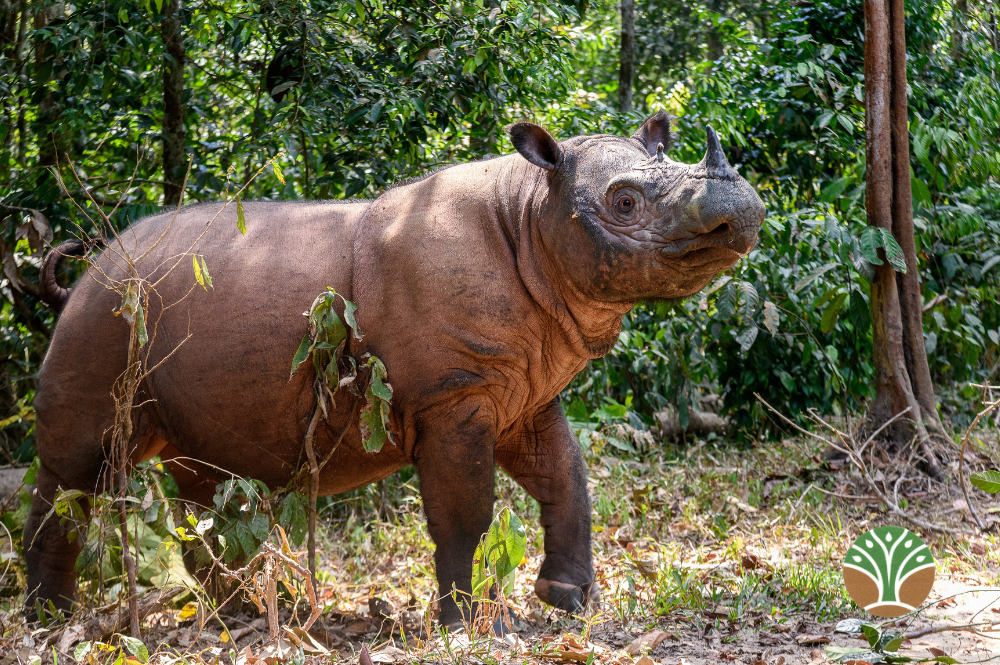
The Sumatran rhino is listed as CR A2cd+3cd+4cd; C2a(i); D1 – three separate criteria triggered simultaneously in the 2020 assessment. The population has declined by more than 80% over three generations as a result of poaching and habitat loss, and that decline is continuing. Fewer than 250 mature individuals remain, with no single subpopulation exceeding 50 and a continuing decline across all of them
Javan Rhino Conservation and IUCN Red List Status
Javan rhino (Rhinoceros sondaicus) — Critically Endangered – 2020 Assessment
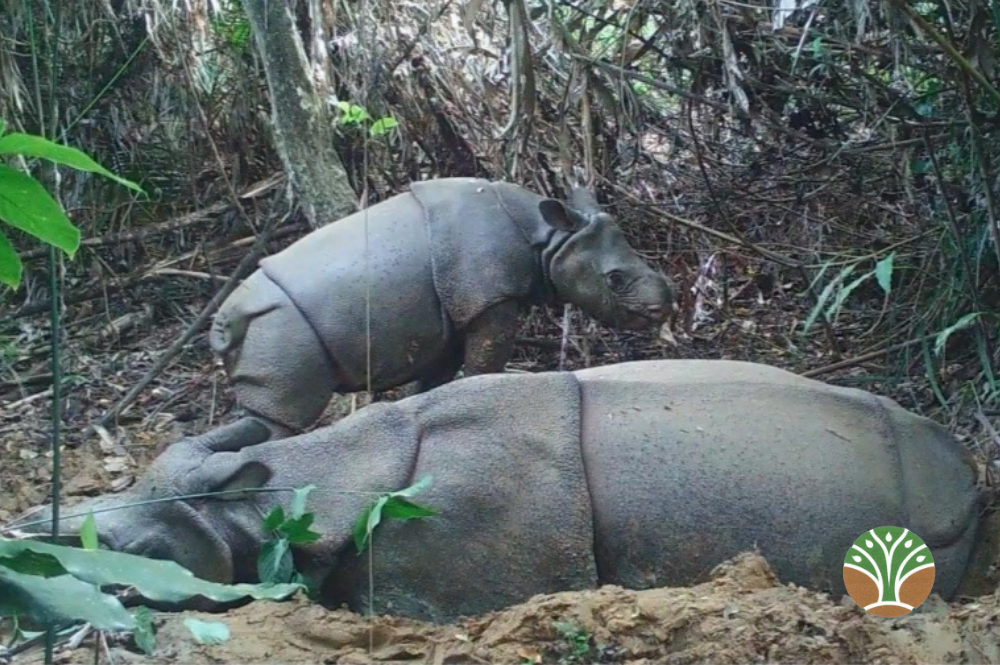
The Javan rhino is listed as CR D.2 The 2020 assessment recorded approximately 68 animals in Ujung Kulon National Park in Java, of which around 33% were inferred to be reproductive, placing mature individuals at approximately 18, which triggers Criterion D. The entire species exists in one population, in one national park, with no individuals held in captivity.2
Black Rhino Conservation and the IUCN Red List Status
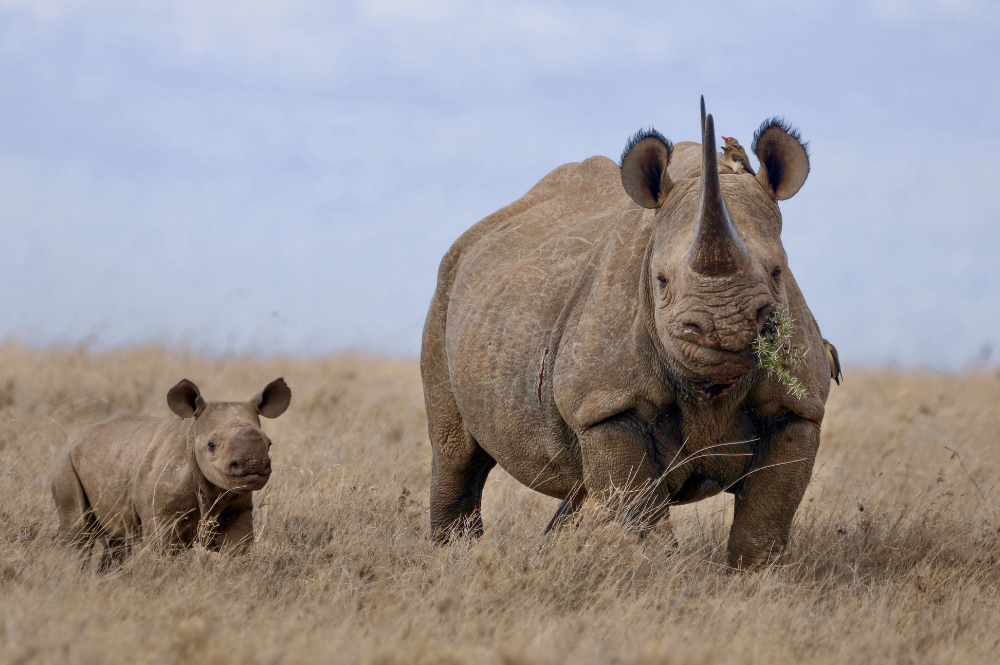
Black rhino (Diceros bicornis) — Critically Endangered – 2020 Assessment
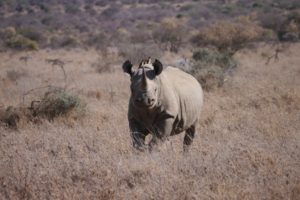
With around 6,788 animals across Africa, the black rhino is the most numerous of the three Critically Endangered rhino species. The listing code is CR A2abd+4abd3. By the mid-1990s, large-scale poaching had reduced numbers to fewer than 2,500. Conservation efforts have more than doubled numbers since, and black rhino numbers grew by 5.2% in 2024. The three-generation window captures the historical decline, so the Critically Endangered listing remains in place.
Greater One-Horned Rhino Conservation and IUCN Status
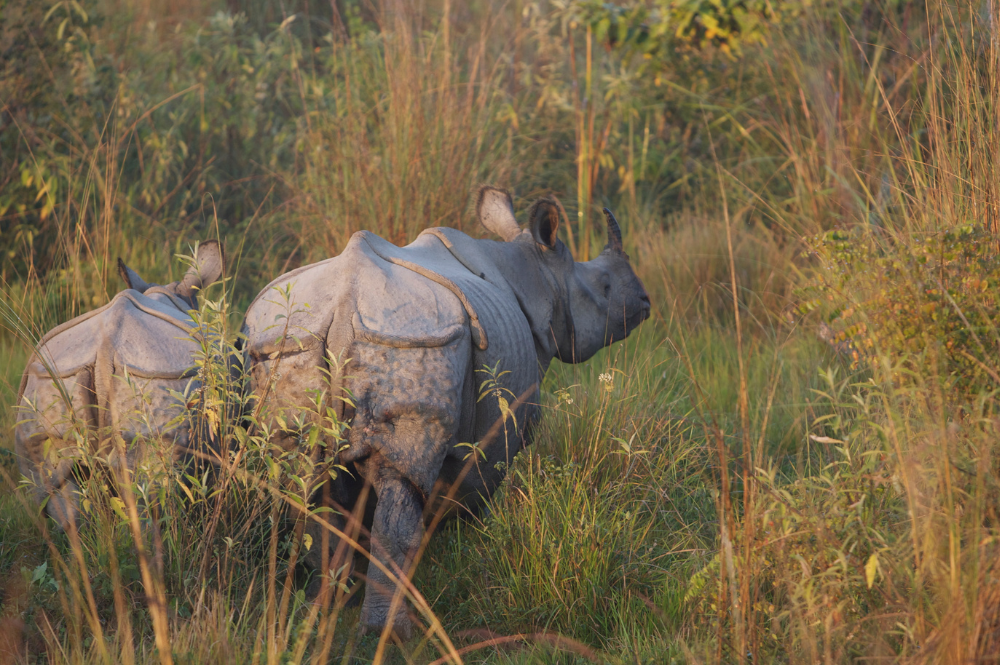
Greater one-horned rhino (Rhinoceros unicornis) — Vulnerable – 2019 Assessment
The Greater one-horned rhino is listed as VU B2ab(iii) 4. Around 4,075 individuals now exist across India and Nepal, up from fewer than 200 at the start of the 20th Century. The species’ total area of occupancy is less than 2,000 km² spread across just twelve protected sites, and more than 70% of the global population is found in Kaziranga National Park in Assam4. The restricted and fragmented range, alongside continuing declines in habitat quality, triggered the Vulnerable listing.
White Rhino Conservation and Near Threatened IUCN Status
White rhino (Ceratotherium simum) — Near Threatened – 2020 Assessment
Latest official figures estimate approximately 15,752 individuals in the wild today, however the 2020 assessment placed the white rhino as Near Threatened5 rather than Least Concern because, without continued conservation investment, a significant decline over three generations was considered plausible given ongoing poaching pressure. Southern white rhino numbers declined by 11.2% in 2024, supporting the continued vigilance of the Near Threatened listing. Only two non-breeding females survive from the Northern white rhino subspecies (C. s. cottoni), and this subspecies is considered functionally extinct.
Recovery and Hope in Rhino Conservation and the IUCN Green Status
The Red List measures extinction risk. The IUCN Green Status of Species, introduced in 2020, complements it by measuring recovery – asking not how close a species is to extinction, but how far it is from being fully recovered. A Green List assessment has been undertaken for the black rhino and you can read more about its Green Status here.
That potential for recovery drives everything we do. The Greater one-horned rhino has grown from fewer than 200 animals to over 4,000 within a century. The Southern white rhino was rebuilt from as few as 20-50 individuals to more than 15,000. These are not small achievements. They are proof that sustained, science-led conservation works – and sustain our mission to achieve this recovery for all five rhino species.
References
- 1Ellis, S. and Talukdar, B. 2020. Dicerorhinus sumatrensis. The IUCN Red List of Threatened Species 2020: e.T6553A18493355. https://dx.doi.org/10.2305/IUCN.UK.2020-2.RLTS.T6553A18493355.en
- 2Ellis, S. and Talukdar, B. 2020. Rhinoceros sondaicus. The IUCN Red List of Threatened Species 2020: e.T19495A18493900. https://dx.doi.org/10.2305/IUCN.UK.2020-2.RLTS.T19495A18493900.en
- 3Emslie, R. 2020. Diceros bicornis. The IUCN Red List of Threatened Species 2020: e.T6557A152728945. https://dx.doi.org/10.2305/IUCN.UK.2020-1.RLTS.T6557A152728945.en
- 4Ellis, S. and Talukdar, B. 2019. Rhinoceros unicornis. The IUCN Red List of Threatened Species 2019: e.T19496A18494149. https://dx.doi.org/10.2305/IUCN.UK.2019-3.RLTS.T19496A18494149.en
- 5Emslie, R. 2020. Ceratotherium simum. The IUCN Red List of Threatened Species 2020: e.T4185A45813880. https://dx.doi.org/10.2305/IUCN.UK.2020-1.RLTS.T4185A45813880.en