




Guest blog from Eleanor Glynne-Jones, our 2024-2025 Michael Hearn Intern.
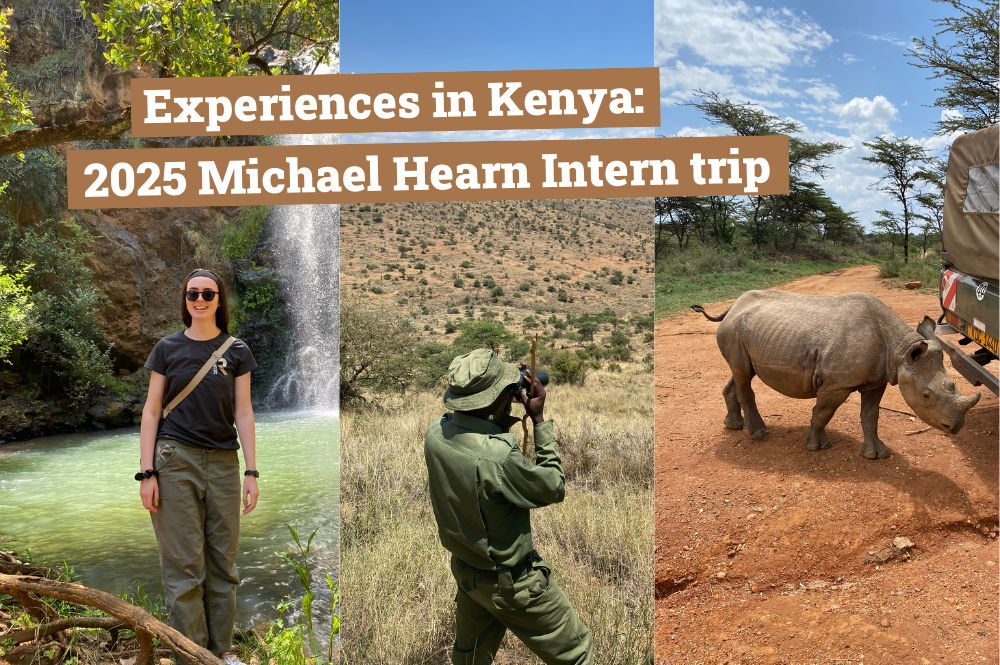
As the 18th Michael Hearn Intern at Save the Rhino, part of my experience was the opportunity to travel to Africa for the first time in September 2025 and spend three weeks in Kenya, hosted by our partners in the field.
After spending my first week in Kenya at the amazing ForRangers Ultra, I then spent a week at Lewa Wildlife Conservancy and a week at Ol Jogi Wildlife Conservancy to learn about the incredible work they do for wildlife and the local communities.
See the 2025 ForRangers Ultra Race Diary for more details on the 2025 ForRangers Ultra.
Lewa Wildlife Conservancy
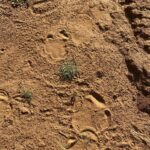
After a week of camping in freezing temperatures, I was excited to be staying in one of Lewa’s Safari Tents – which included a double bed and a hot shower! My week started with a tour of the stunning Ngare Ndare forest with Robert, one of the tour guides. Whilst we didn’t see much wildlife, I learnt a lot about how to spot tracks and traces left behind by elephants and rhinos. The forest acts as a vital migratory corridor between Mount Kenya and Lewa and Northern Kenya, allowing elephants, leopards, and buffalo to move safely between different ecosystems.
We also crossed over a 450m tree canopy walkway suspended 30 feet above the ground, getting an amazing bird’s eye view of the forest.
I then got the opportunity to spend time out in the field with Benson Kibet, the rhino specialist at Lewa, and, with the help of countless rangers, observed and photographed as many rhinos as we could, to provide accurate data for rhino reporting.
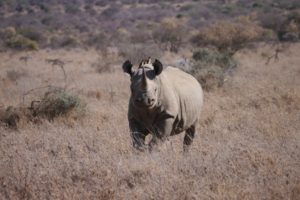
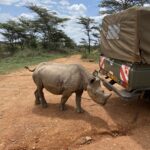
During this time, I learnt all about ear notching, how to ID a rhino, and about the behaviour and temperaments of black and white rhinos. Black rhinos can be more excitable and unpredictable, which was proven when a black rhino named Anna charged at our truck, a scary but very powerful moment!
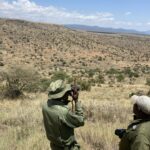
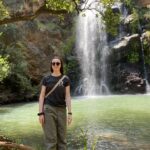
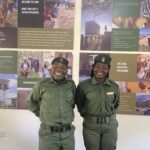
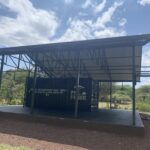
Being out in the field allowed me to experience the beautiful and expansive landscapes of Lewa stretching across 62,000 acres, from dense forests to open savanna. It gave me an appreciation for how physically demanding being a ranger truly is, and why good-quality boots and uniforms are vital to allow them to work comfortably for such long hours in the intense heat. It also emphasised the importance of the ranger gyms provided to the conservancies by ForRangers. I got the chance to work out with the rangers one morning, and it was certainly tough! For the rangers, these gyms are vital for keeping fit, so they can work for long hours out in the field covering long distances.
Lewa does not just do important work for wildlife, it also supports communities in and around the conservancy. From healthcare clinics to sustainable water and agriculture projects, they ensure that wildlife conservation benefits the local communities. They ensure that people living in and around Lewa have access to employment, clean water, and healthcare. They also have a brilliant education programme which supports 27 schools throughout Laikipia, Meru, and Isiolo, improving school infrastructure, training teachers, providing meals, and offering bursaries. We visited The Enaikishomi School, which is an amazing school supported through Lewa, and got to see the direct impact donors can have. There is also a brilliant conservation education centre where school visits take place, allowing children to learn about environmental challenges and see animals in their natural habitats. It was great fun going on a game drive with the visiting school and seeing how excited and engaged all the children were!
Ol Jogi Conservancy
After an amazing week at Lewa, I then travelled to Ol Jogi, where I would spend a week shadowing Fi Evans, Ol Jogi’s Head of Conservation and Research. It was fascinating to get such an in-depth insight into what it’s like to work at a wildlife conservancy where every day is so different and unpredictable. From animal tracking to canine unit meetings and working on EarthRanger (a software used to track collared animals, locate rangers, and keep track of any crimes within the conservancies, whilst recording ongoing jobs), it was a really varied week.
I had the privilege of meeting Bella, a black rhino, during the ForRangers Ultra and was thrilled to be able to see her again to film some clips for a ‘Day in the Life of Bella’ video. Bella is 2 and ½ years old and was taken into the care of Ol Jogi to be rehabilitated after she was sadly abandoned by her mother at just two days old. When she is old enough to survive independently, she will be released back into the wild.
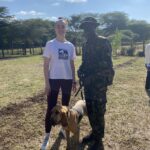
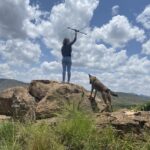
After meeting the canine unit at Lewa, it was great to sit in on an Ol Jogi canine unit meeting, get a more in-depth insight into the training of the dogs, and how rangers record their patrols.
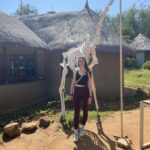
For each dog, they discussed and recorded its behaviour, how far it walked, its health, and what areas of training needed to be worked on for them to be ready for patrols. I also had a tour of Ol Jogi’s Wildlife Rescue Centre (WRC), where they keep orphaned and injured animals. School trips take place here, giving local children the opportunity to get up close with the wildlife in a safe environment and learn about conservation from the extremely knowledgeable guides.
Whilst out on drives with Ol Jogi’s Species Monitor, Wilson, and out in the field with Fi, I got the chance to see VHF telemetry in action. This radio tracking technology is used to track the location and movement of Ol Jogi’s collared animals. We tested the equipment to ensure it was picking up any collared animals and used it on a search to find a pride of lions. It was amazing to see the tech in action and get some practical hands-on field experience.
One of my main tasks during my time at Ol Jogi was to input the coordinates of fences which had been broken down by some troublesome elephants so they could be fixed. I also went through recorded wildlife sightings from rangers and camera traps, mostly of rhinos, to verify that all the records were complete and accurate.
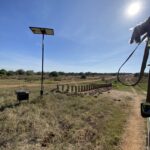
In and around Ol Jogi, there are 18 wildlife corridors which allow all species, except for rhinos which must be contained for security reasons, to migrate in and out of the conservancy. Migration is important to allow sustainable habitat use and improve genetic diversity. A solar-powered camera trap, which is movement-activated, enables EarthRanger to record every time an animal migrates in or out of the conservancy.
Conclusion
After working at Save the Rhino for almost a year, it was amazing to witness first-hand the direct impact of the charity’s work, from ranger welfare to growing rhino populations.
For me personally, it was an amazing experience seeing rhinos in the wild for the first time. I would like to say a huge thank you to Lewa and Ol Jogi for giving me these experiences, particularly to Prudence and Joy at Lewa for organising my week, to Fi at Ol Jogi for giving me insight into the life of an ecologist, and of course to Save the Rhino International.
Eleanor Glynne-Jones, 18th Michael Hearn Intern, 2024-25