




Black Rhino Population Recovery in Zimbabwe and World Population Day
World Population Day is often a moment to reflect on how populations change, grow and survive over time. For Critically Endangered black rhinos, every birth is significant, and the recovery of populations depends on decades of careful protection and management.
This story from Zimbabwe highlights not only the resilience of individual rhinos, but also how generations of rhino families are helping to rebuild populations and secure a future for the species.
Black Rhino Conservation Stories and Rhino Family Dynasties
Over the decades, the strong social structures and individual characters that black rhinos develop during their lifetimes become sagas intertwined with the life histories of the rhino conservationists involved in their management.
Three black rhino cows from Zimbabwe provide fascinating examples of rhinos with different chapters in their conservation history.
Rhino Conservation Challenges in Zimbabwe During the 2000s
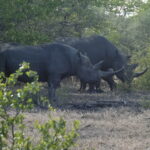
The 2000s were challenging years for wildlife conservation in Zimbabwe due to the political environment and resulting insecure land tenure. Inunwa, Sitholiwe, and Floppy lived in a group of over 30 rhinos north of the city of Bulawayo, on what had been a cattle ranch. Their home was turned into diminishing and insecure patches of habitat, fragmented by subsistence farming and small-scale mines. Inunwa and the other founders of this population had previously been moved there from the Zambezi Valley to escape the impacts of cross-border poaching in the early 1990s.
The rhinos settled well and showed strong population growth for slightly more than a decade before the property owners were forced off their land.
Black Rhino Translocation and Population Protection in Zimbabwe
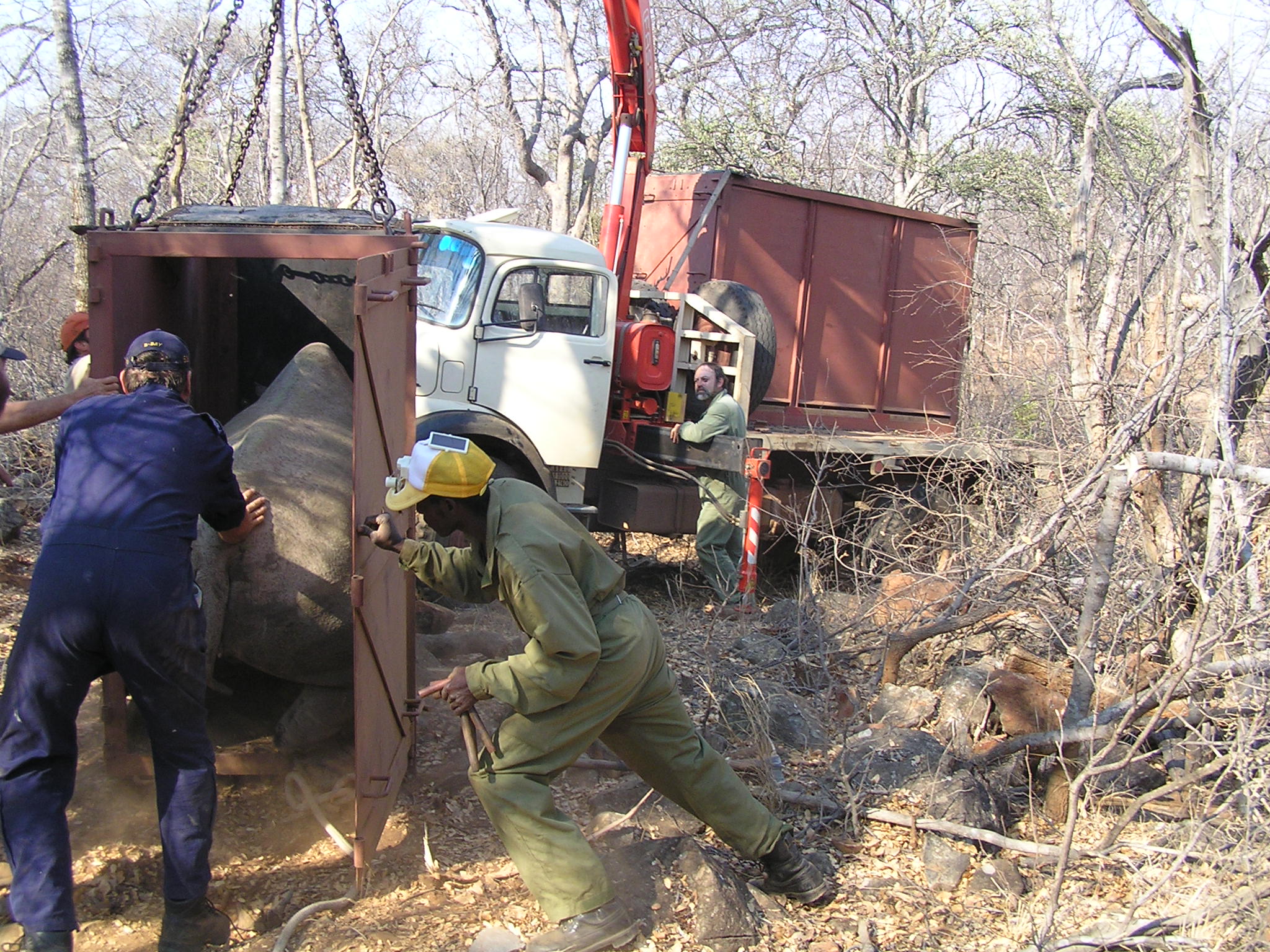
From experience elsewhere, Lowveld Rhino Trust (LRT) were concerned these rhinos would be picked off by poachers if they were not rescued and translocated to a safer area.
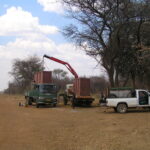
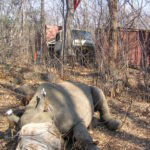
Approval for the move was eventually granted, but not without ongoing political challenges meaning the operation required very careful strategic planning and was undertaken using three helicopters and a fixed-wing aircraft. The operation began in the sweltering heat of October 2005 with 30 black rhinos found alive to try and save. A third of these animals had already been snared with heavy duty mining cable leaving some scarred by their wounds. Floppy was so named as her ear permanently flopped due to an injury from a snare, other rhinos still had snare cables embedded in their flesh.
Four animals were so badly injured they did not survive the translocation.
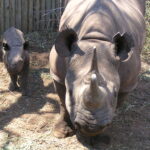
The oldest rhino in the group was the ex-Zambezi cow Inunwa, now about 30 years old. The youngest was one month old Chain – so small he was translocated in a compartment of a modified lion crate on the back of a pick-up.
Bubye Valley Conservancy and Black Rhino Population Growth
The 26 survivors settled into their new home in Bubye Valley Conservancy (BVC) with 54 other refugee rhinos recently translocated by LRT from other insecure areas.
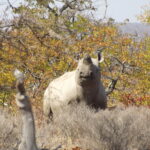
Like those translocated before them, these new immigrants showed an uncanny ability to seek out familiar animals in their vast new landscape. Inunwa settled in next to Sitholiwe who in turn neighboured Floppy.
To date, these three females have produced 40 progeny in BVC.
Collectively, over the 20 years since they were moved, the 26 rescued rhinos have produced 120 offspring.
Rhino Social Bonds and Black Rhino Conservation
Of course, there have also been losses – both poaching and natural.
Inunwa has since died of old age. She was found by LRT’s monitors while tracking her granddaughter, who visited her grandmother’s bonesite. The tracks of rhino’s relatives and neighbours have often led patrols to the bodies of sometimes long-dead rhinos, indicating that relationships between rhinos may be much deeper and more durable than we realise. When Floppy’s daughter died, leaving behind a 19-month-old orphan, it was Inunwa’s great-grand-son Ivan who joined up with the vulnerable calf for over a year.
Black Rhino Translocations to Gonarezhou National Park
In 2021, when selecting rhinos to create a new population in Gonarezhou National Park (GNP), particular attention was given to their social bonds. Chain, the tiny calf who arrived more than 15 years previously, was selected for the move along with some of the females in his home range. On release in GNP, Chain established his new home range encompassing his familiar females from Bubye Valley. These females have all gone on to quickly produce calves in their new home – further contributing to the recovery of this magnificent species.
Written by Raoul du Toit and Natasha Anderson | Lowveld Rhino Trust