




Ranger Welfare in Conservation: Why Equipping Rangers Matters
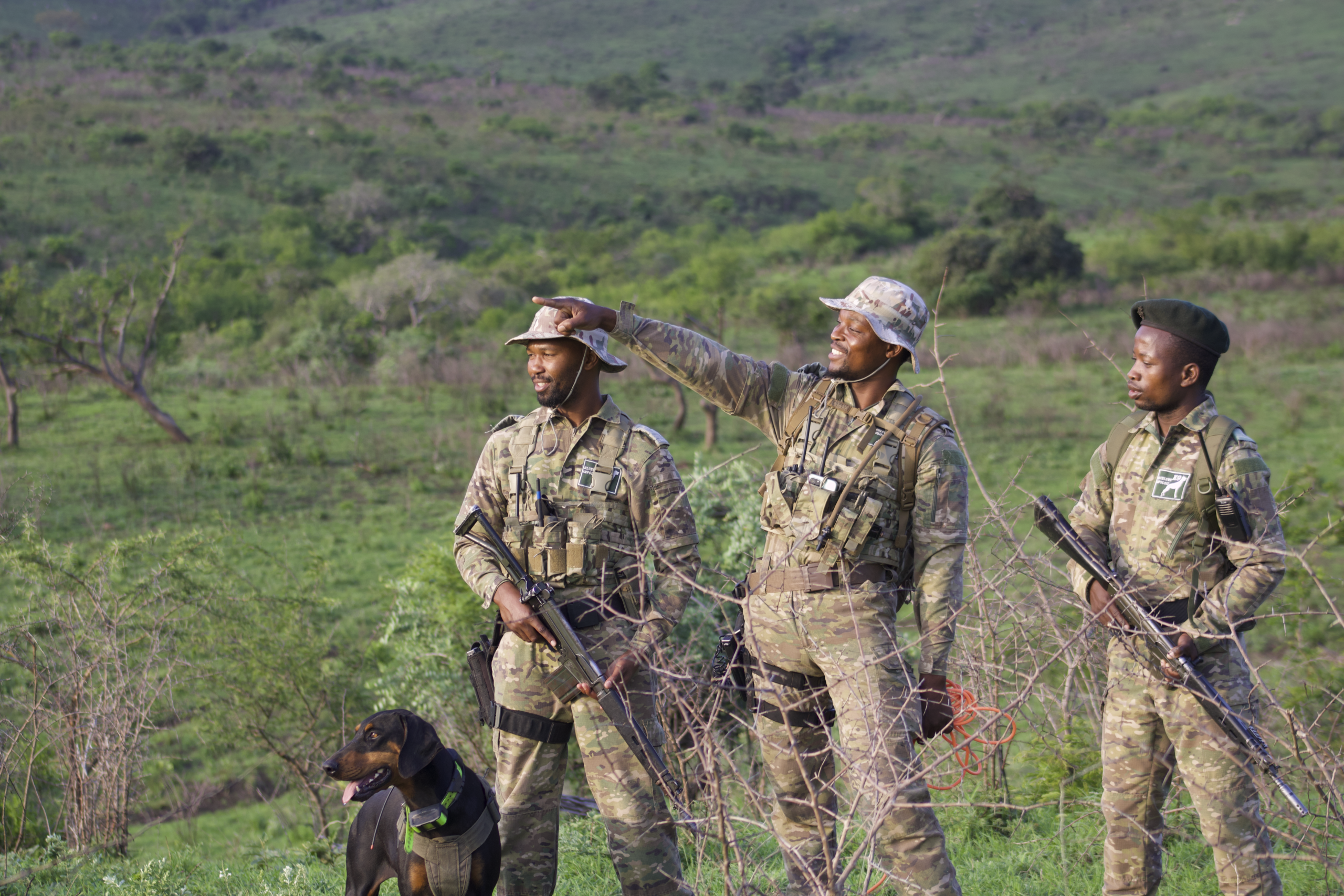
Rangers play a crucial role in protecting rhinos, as well as other endangered wildlife, conserving unique ecosystems and tackling poaching across Africa. Patrolling vast, rugged landscapes, they cover long distances, often on foot and in tough weather conditions. Yet without proper footwear, uniforms and equipment, they cannot work safely or effectively.
With funding stretched to the limit, worn-out items are often patched up or replaced too late, making already challenging work even harder. And beyond the physical toll, inadequate equipment can damage morale too, giving the impression that their work is not fully appreciated. Ranger welfare sits at the heart of everything we do at Save the Rhino, because we know that a ranger who is well-equipped and feels valued is not only safer, but also more effective and more motivated. Providing essential kit is one of the most direct ways we can demonstrate that the people protecting rhinos matter, not just the rhinos themselves.
Step Up for Rangers: Supporting Ranger Welfare in Africa
In May 2025, we launched our Step Up for Rangers appeal with exactly that in mind. In just 10 days, the appeal surpassed its target, raising £21,426 to provide essential kit for rangers in Africa. These funds have now been put to work at two iconic reserves in KwaZulu-Natal, South Africa: Hluhluwe-iMfolozi Park (HiP) and uMkhuze Game Reserve. Here is what this support has made possible.
Ranger Welfare at Hluhluwe-iMfolozi Park: Essential Boots and Kit
Better Boots for Rangers on the Front Line of Conservation
Sometimes, the most meaningful support is also the most straightforward. At HiP, often regarded as the birthplace of white rhino conservation, the immediate need was for better boots.
Rangers at HiP walk long distances daily through thornveld and rocky bushveld. Comfort matters enormously over those distances, as do ankle support and protection from thorns and sharp terrain. The team had been searching for the right solution for some time after their previous supplier became unavailable.
Thanks to the appeal, 140 pairs of specially designed canvas boots with Kevlar protection were procured and issued to rangers across the Ppark. The Kevlar lining adds a layer of protection against sharp objects, while the design prioritises comfort and durability for exactly the kind of terrain HiP presents.
And because good boots deserve good socks, 300 pairs of long socks in the colours of Ezemvelo KZN Wildlife, the organisation that manages the reserve, were also procured, averaging two pairs per ranger. It might seem like a small detail, but blisters and foot problems can significantly reduce a ranger’s ability to cover ground effectively.
The impact has been immediate. As Dirk Swart, the project coordinator and Section Ranger at Manzibomvu, puts it: “The most important monitoring of any reserve is done by foot, which requires staff to walk daily in all kinds of conditions. This is why the procurement and issuing of quality boots and decent, comfortable socks to staff is so important and impacts the effectiveness of ground coverage in the reserve.”
Rangers across the Park have welcomed the new kit. “Canvas boots are lightweight and durable footwear; they reduce fatigue, offering flexibility, comfort and easy cleaning,” says Hector Mokoka, a Field Ranger at HiP. Dennis Kelly, Section Ranger at Makhamisa Section, agrees: “The canvas boots we received are ideal in coping with the long patrol distances, different weather conditions and the unfriendly terrain associated with HiP.”
For Joe Ntombela, a Principal Field Ranger, the support means something beyond the practical: “I would like to thank you all for supporting us with these boots and socks and all the other equipment we receive. It really will help us a lot.”
Essential Ranger Equipment at uMkhuze Game Reserve
Eduard Goosen, Conservation Manager at uMkhuze, describes the situation facing his team:
“We are facing an extremely challenging situation. Daily, we see how our resources are getting less and less, whilst the challenges are just increasing. To receive notice of support from international donors is amazing. It boosts our morale. It makes the long and often fruitless hours out in the field worth the while, knowing that there are people who really care, who are helping us to achieve what often feels impossible.”
With that in mind, the funding was used to procure a range of carefully chosen equipment, each item selected to address a specific gap.
Ground-to-Air Radios for Conservation Operations
Effective communication between rangers on the ground and aircraft overhead is essential during rhino monitoring and response to incidents. Two handheld ground-to-air radios were procured and issued to the Section Ranger and the Rhino Monitor. Communications between ground and air teams are now significantly more effective.
K9 Tracking Collars for Conservation Dogs
uMkhuze’s K9 unit consists of two dogs, Davie (a Belgian Malinois) and Cally (an American English Coonhound), who assist with tracking. Until now, they had been working without tracking collars, which restricted what handlers could safely ask of them in uMkhuze’s dense bush and Big Five territory. Two Garmin Alpha TT25 tracking collars have now been fitted, giving handlers the confidence to work the dogs more effectively and keeping the animals safe.
Ration Packs for Rangers in the Field
When rangers respond to an incident, they often have no idea how long they will be in the field. Running out of food and energy is not just uncomfortable; it affects decision-making and endurance. 200 scientifically developed ration packs have been procured, each containing enough calories to sustain a ranger for more than 12 hours. Knowing they will not go hungry has a genuine effect on ranger confidence and capability.
Night-Vision Equipment for Rhino Monitoring
Two Bushnell Equinox monoculars have been purchased. These are used both for ranger patrols at night and by the Rhino Monitor, who can now observe rhinos visiting waterholes after dark, improving identification and supplementing the Reserve’s population data.
Field Webbing Kits for Rangers
Six high-quality ranger field webbing kits were procured in collaboration with the ranger team to ensure they met operational requirements. These allow rangers to carry their provisions and first-aid equipment efficiently throughout long days in the field.
Camera Trap Equipment for Wildlife Monitoring
Savings made during procurement meant uMkhuze was also able to purchase 20 replacement batteries and cables for existing remote-sensing camera traps, keeping this monitoring equipment operational for longer.
How Ranger Welfare Supports Rhino Conservation
Rangers play a crucial role in rhino conservation, not only by protecting endangered species and their habitats, but also by monitoring and maintaining them. Simple, well-chosen equipment makes a real difference to their safety, effectiveness and morale, showing them that their work is valued and supported.
At Save the Rhino, this kind of impact is only possible thanks to the generosity of our donors. We are grateful to everyone who contributed to the Step Up for Rangers appeal.