



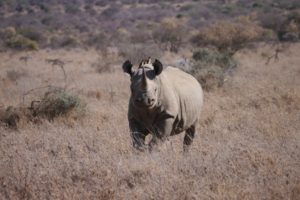


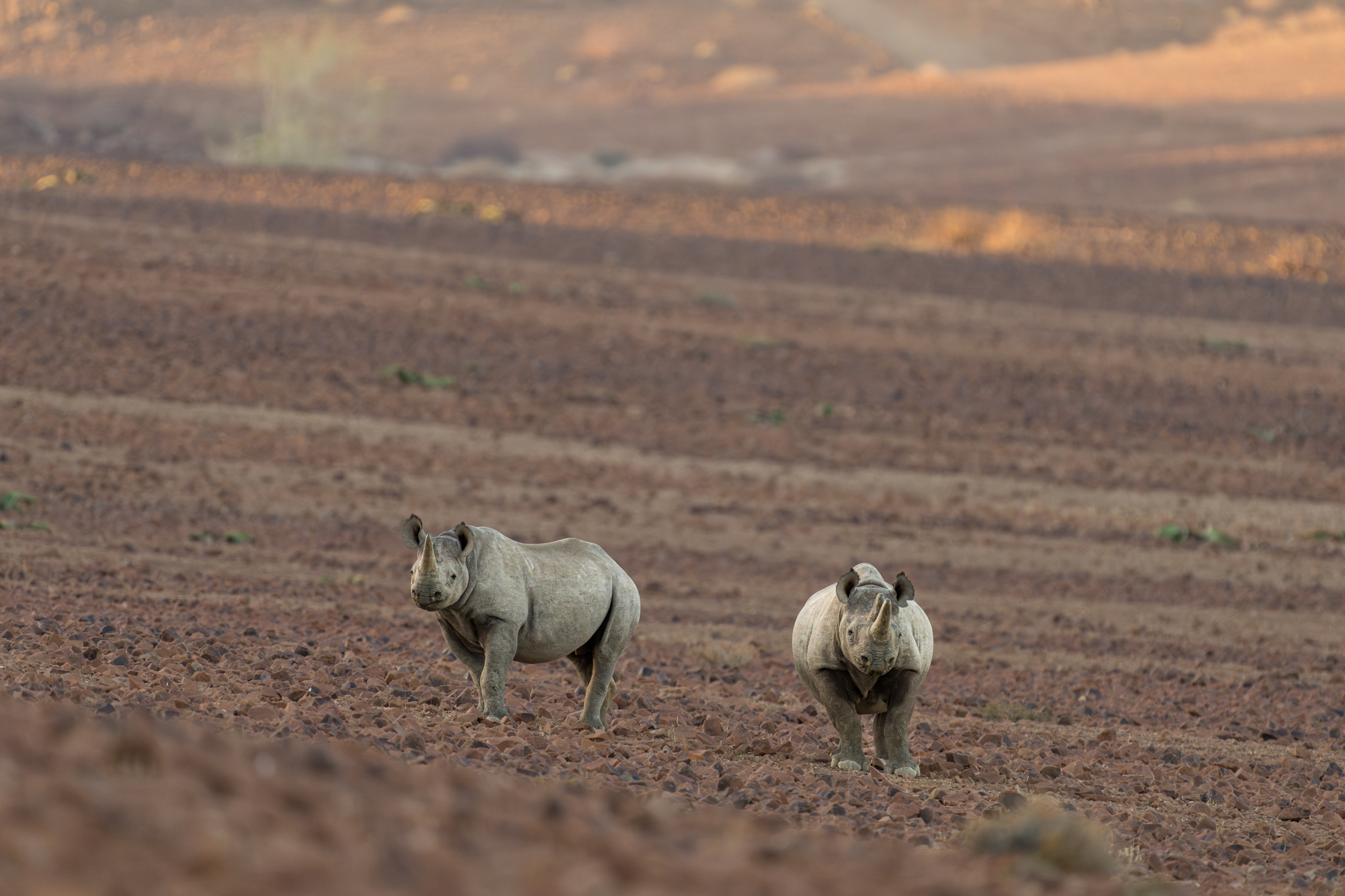
Namibia is home to one of the world’s most important populations of black rhino (Diceros bicornis). Black rhinos have three recognised subspecies: the south-western (Diceros bicornis bicornis), found mainly in Namibia and parts of South Africa; the eastern (Diceros bicornis michaeli), found in East Africa; and the south-central (Diceros bicornis minor), found in southern regions of Africa. Namibia’s black rhinos are predominantly the south-western subspecies, adapted to arid and semi-arid conditions where they browse on shrubs and trees. Once widespread across much of sub-Saharan Africa, black rhinos were driven to the brink of extinction by poaching for their horns, habitat loss, and conflict with humans. Despite decades of conservation progress, they remain critically endangered, with poaching and environmental pressures still threatening their survival. Protecting Namibia’s rhinos is vital to maintain the ecological health of the landscapes they inhabit and the communities that live alongside them.
Conservation in Namibia’s north-west has continued with determination and commitment in the face of ongoing challenges. In recent years, the increase in poaching pressure, interest in mining inside rhino rangeland and the sudden removal of much needed funding has increased strain on Save the Rhino Trust (SRT). To combat this, patrols have been expanded and adapted to rising poaching threats with rangers strategically deployed to high-risk areas, communities more actively engaged, and mounted units introduced in difficult terrain. SRT has also introduced aerial monitoring, a development made possible after the Chief Operating Officer earnt his pilot’s licence. The inclusion of flights has strengthened deterrence, with surveillance extended over villages and main roads as well as core rhino ranges. During the festive season, when the risk of poaching rises, aircraft and vehicles together covered more than 12,800 kilometres, providing a visible and sustained presence across the landscape.
Monitoring the health of rhino populations is vital to their protection. Regular assessments guide management decisions from dehorning to translocation, and highlight both the progresses and the pressures that they face. In Nyae Nyae Conservancy in north-eastern Namibia, where poaching risk is especially prevalent, rangers from SRT now live permanently within the camp, supported by mules moved from the Kunene area in the north-west to increase mobility. This camp covers over 9,000 hectares and is home to a population of black rhinos who are under constant supervision. Western Kunene, meanwhile, has endured the impact of more than ten years of below-average rainfall, with populations declining as a result. The exceptional rain recorded in March 2025 was the most significant rainfall in a decade, bringing renewed optimism that improved breeding may boost numbers in the years ahead.
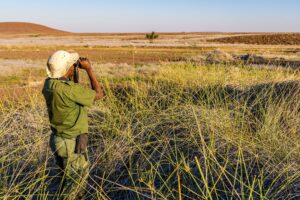
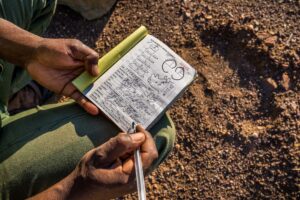
Supporting those who protect rhinos remains a key focus. Ranger welfare is now firmly embedded in operations, with renewed funding making permanent improvements possible. First aid kits and medical supplies have been replenished, training refreshed, and the introduction of telemedicine has ensured 24-hour access to doctors, with prescriptions managed directly at base camps. Twice-yearly medical check-ups further enhance care for rangers working in isolated areas, reflecting the understanding that the health of the rangers is inseparable from the health of the rhino population.
Looking forward, there are plans to introduce additional rhinos into a conservancy in northern Kunene, where a solitary male currently roams. The arrival of females is expected to form the nucleus of a new breeding group, strengthening both ecological resilience and the opportunities available to local communities through tourism and conservation partnerships.
Together, these efforts show us the resilience of the rangers responsible for the survival of rhino populations in Namibia. Despite poaching threats, funding shortages, and climatic extremes, the ranger patrols continue and Namibia’s natural heritage is protected.