



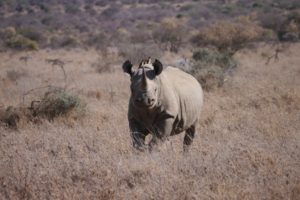


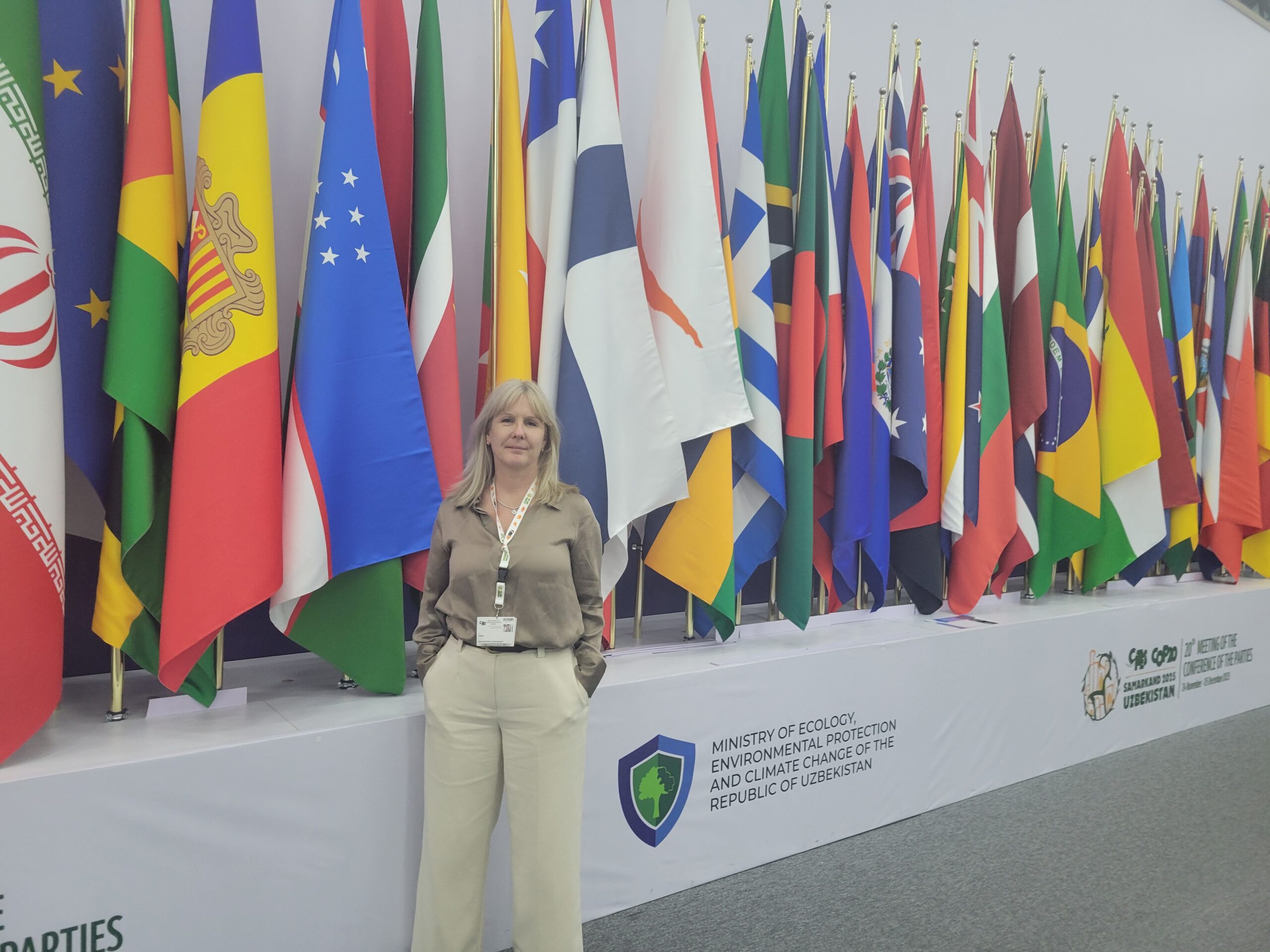
Rhino conservation is a global challenge, involving the African and Asian countries where rhinos live, the countries where rhino horn is consumed, and the countries through which horn transits along illegal trade routes. Uzbekistan in Central Asia might not be the first place that comes to mind when discussing rhinos, but earlier this month it hosted the Conference of the Parties (CoP20) to the Convention on International Trade in Endangered Species of Wild Fauna and Flora (CITES). Marking 50 years of regulating international wildlife trade, CITES brought together governments, experts and NGOs—including Save the Rhino, participating as an observer at a CoP for the first time.
Rhino status, conservation, and enforcement
During the second week, attention turned to the African and Asian Rhinoceroses – Status, Conservation and Trade report, commissioned by the CITES Secretariat from the African and Asian Rhino Specialist Groups of the IUCN Species Survival Commission and TRAFFIC. This report provides essential, up-to-date information on population trends, poaching rates, and illegal horn trafficking, and is considered a potential model for species reporting within CITES. The document has been produced for CITES CoPs since 2009, though was a reduced format this year due to a reduced budget being made available by CITES Parties.
In addition, key information was available form the report of the June 2025 Rhino Enforcement Task Force meeting in Pretoria, where global experts developed strategies and proposed actions to further strengthen responses to address rhinoceros poaching and horn trafficking and horn demand and to guide actions by Parties. Key priorities included:
• Strengthening international collaboration
• Sharing seizure data, forensic samples and intelligence
• Identifying trafficking hotspots
• Tracking illicit financial flows
• Addressing corruption
• Better understanding key consumer markets
•Using insights from both reports, the CITES Secretariat identified priority countries requiring additional action for rhino conservation.
From CoP20, Parties agreed on key decisions, including:
• Developing demand-reduction programmes in countries with illegal rhino horn markets
• Implementing and reporting back on the Rhino Enforcement Task Force strategies
• Ensuring Indonesia monitors and protects its Javan rhino population and reports back on progress
Save the Rhino views previous CoP mechanisms — requiring the countries which are important for rhino conservation to report progress — as valuable tools for accountability. It is therefore disappointing that this system has been scaled back. The United States proposed establishing a dedicated CITES rhino working group to restore this function, but unfortunately the idea was not adopted.
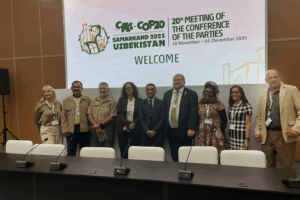
Side event: strengthening CITES impact for rhino conservation
On the final day of CoP20, Save the Rhino co-hosted a side event with the International Rhino Foundation, bringing together Parties and experts to explore how CITES can better support effective rhino conservation.
Speakers included:
• Ben van Rensburg, Chief of the Enforcement Unit, CITES Secretariat
• Dr Sam Ferreira, Scientific Officer, IUCN SSC African Rhino Specialist Group
• Dr Bibhab Talukdar, Chair, IUCN SSC Asian Rhino Specialist Group
• Dr Sharon Baruch-Mordo, Senior Specialist, Rhino and Elephant Trade, TRAFFIC
Additional perspectives came from experts representing the governments of Zimbabwe, Malaysia, Eswatini, Indonesia and South Africa.
Panellists emphasised the need for high-quality data across the entire horn supply chain, reflecting the transnational nature of the threat. They stressed that enforcement should go beyond seizures by improving intelligence sharing, forensic techniques, and emerging technologies. Collaboration between range states and end-user countries was identified as essential, as ultimately addressing the threats and finding solutions for rhinos requires action from consumer states. There were also calls for more robust, peer-reviewed information on rhino horn demand, including evidence such as rhino horn markets in Laos. Participants commended the IUCN/TRAFFIC CITES Rhino Report and recognised the opportunity for additional tools for tracking progress, such as TRAFFIC’s rhino horn trade dashboard.
With CoP20 concluded, we now look ahead to updates from the 81st and 82nd meetings of the CITES Standing Committee, where we hope to see strong progress and continued successes for rhino conservation.