




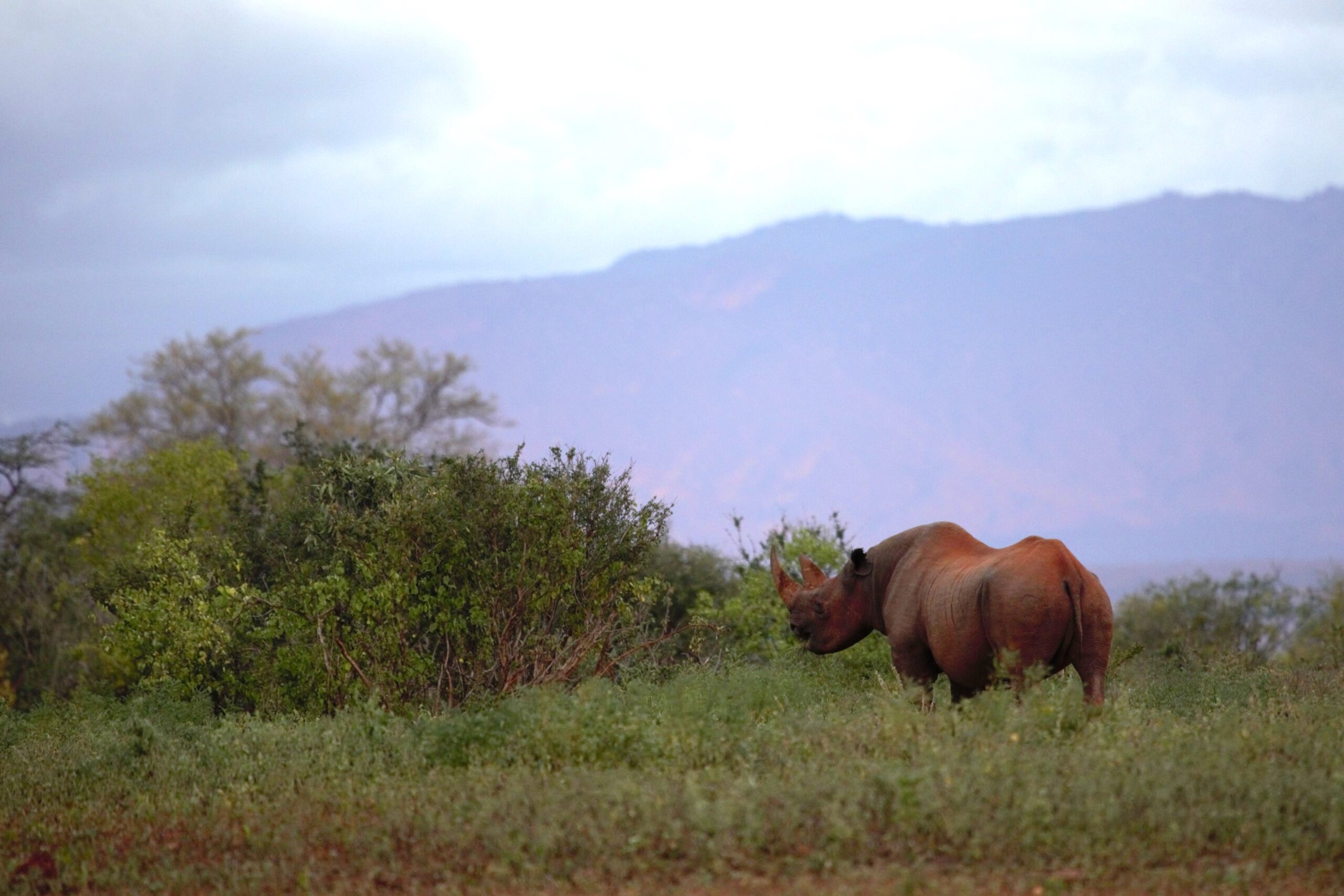
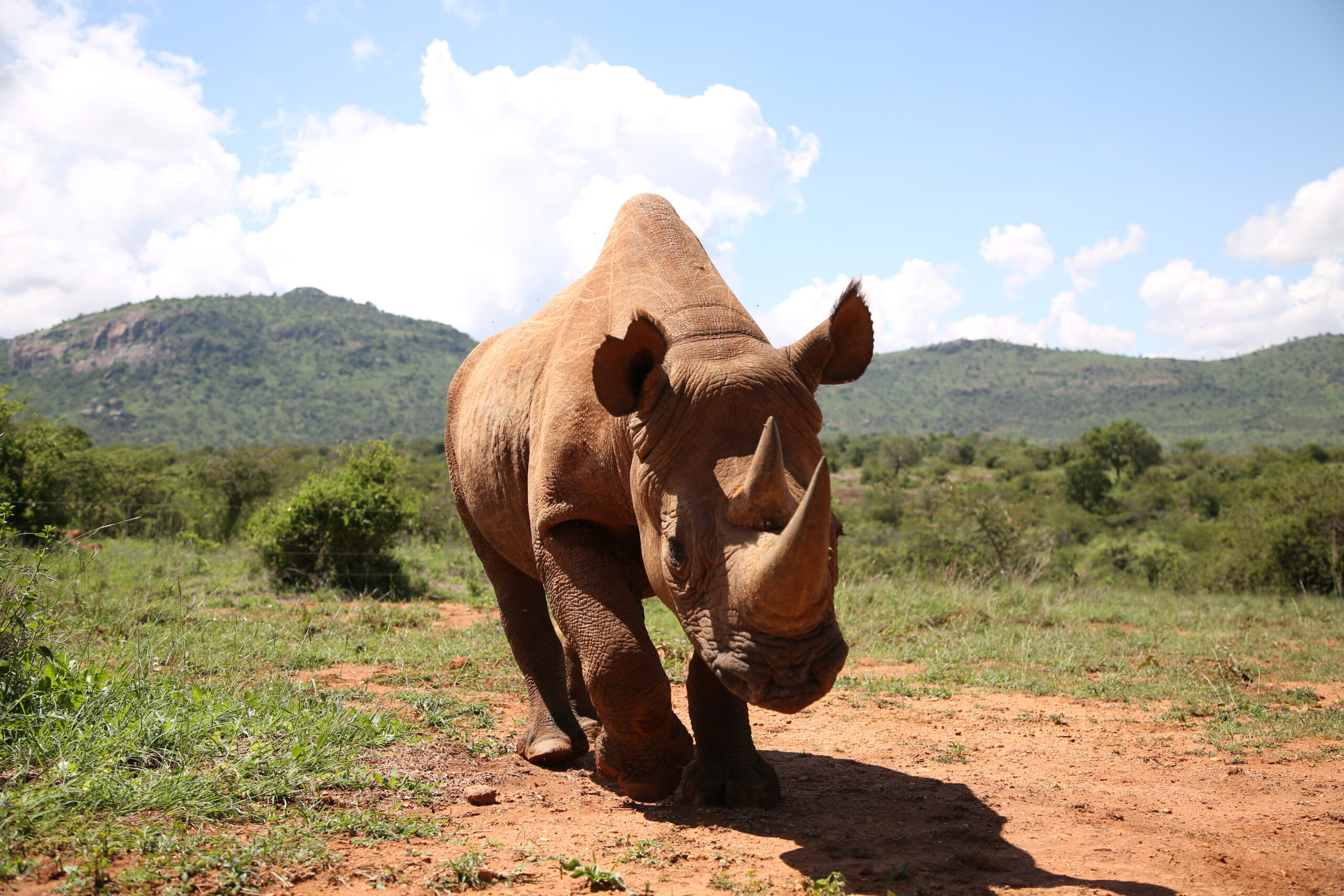
On 9th December 2025, Kenya’s President, William Samoei Ruto, unveiled the expanded Tsavo West Rhino Sanctuary, the largest of its kind in the world. The vision of the Sanctuary is to provide critically needed space for black rhinos to roam, establish territories, and breed, while directly overcoming the pressures that have been limiting their recovery.
Brought to the brink of extinction by poaching during the 1970s and 1980s, coordinated conservation efforts have since seen impressive rebounds in Kenya’s rhino numbers. The country is now home to around 2,000 rhinos, including more than 1,000 black rhinos, representing almost 78% of the global Eastern black rhino (Diceros bicornis michaeli) population. Yet this conservation success has created its own challenges. As numbers have increased, many rhinos remain confined to small, overcrowded sanctuaries, where high densities lead to heightened competition for food and water, injuries from territorial disputes, reduced breeding and higher calf mortality rates. Limited habitat availability also constrains natural movements, reducing genetic diversity and slowing population growth.
These pressures are compounded by environmental and human-related challenges. Degraded landscapes and overgrazing reduce available browsing, while scarce water sources limit rhino distribution. Meanwhile, illegal killing of rhinos for the illicit international trade in rhino horn remains an ongoing threat, making even the most well-protected populations vulnerable.
For many years, the 92km² fenced Ngulia Rhino Sanctuary in Tsavo West National Park has been one such area operating well beyond its ecological carrying capacity. The expansion of the former Sanctuary into a single, secure 3,200km² landscape will also bring together 150 black rhinos from Ngulia and 50 from the Tsavo West Intensive Protection Zone, forming a founder population of 200 – the largest single black rhino population in Kenya. By creating a contiguous, secure habitat, the Sanctuary will alleviate density pressures, restore ecological balance, and support long-term population growth.
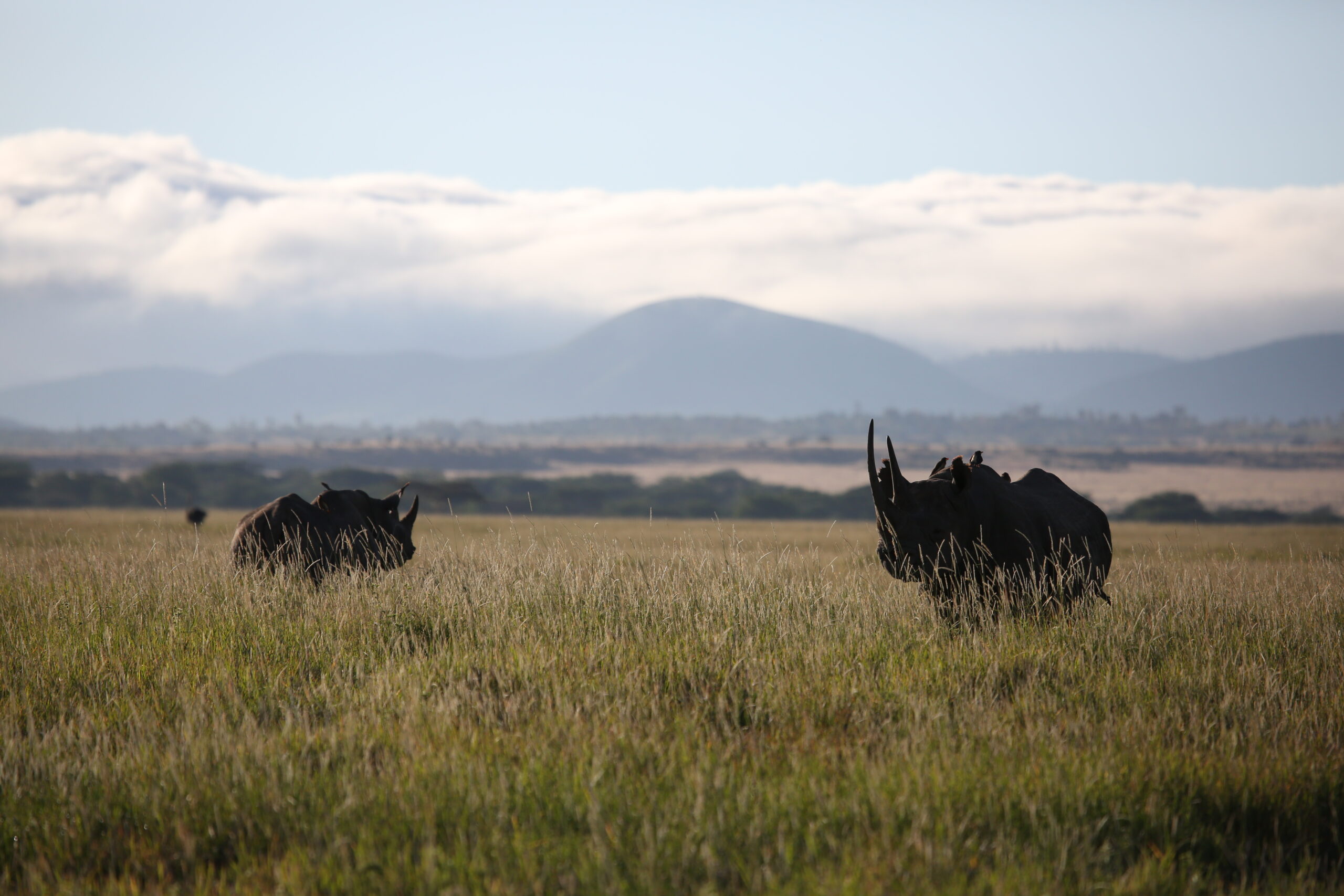
The Tsavo West Rhino Sanctuary directly addresses historical challenges. Degraded land has been restored, with vegetation and water sources replenished to ensure rhinos have the resources they need to establish territories safely. Security measures – including specialised ranger teams, tracking technology, aerial surveillance, and canine units – protect both rhinos and the staff working on the ground.
By expanding into new habitats, the establishment of expanded or new rhino sanctuaries also reduces pressure on the habitat within existing sanctuaries, improving the breeding opportunities for rhino populations at the original sites. Ultimately, expansive, connected habitat strengthens both survival prospects of the black rhino, and the overall ecological integrity of the Tsavo Ecosystem, benefiting a wide array of species.
The Tsavo West Rhino Sanctuary demonstrates what is possible when conservation is planned at scale. The Sanctuary forms a tangible, science-led response to decades of pressures, setting a new benchmark for black rhino protection. Populations can thrive in a safe, connected landscape, establishing territories and breeding without the constraints of overcrowding. Strong community involvement ensures that conservation benefits are shared, while robust security protects the animals from persistent threats.
Save the Rhino International is a long-standing supporter of black rhino conservation efforts in Kenya and is proud to partner with the Kenya Rhino Range Expansion initiative, the lead partner behind Kenya’s landscape scale rhino recovery efforts. We congratulate all involved, including the Government of Kenya and the Kenya Wildlife Service, the Tsavo West Rhino Sanctuary, as well as the Kenya Rhino Range Expansion team for this remarkable achievement and for creating a legacy that will safeguard Kenya’s rhinos for generations to come.
Links: