Kenya: Borana Conservancy
The Borana Conservancy is a 32,000-acre conservation area located on the Laikipia Plateau in the shadow of Mount Kenya. In collaboration with surrounding communities, Borana aims to protect threatened species as a part of a sustainable ecosystem where a holistic approach, involving business activities such as wildlife tourism and pastoralism, contributes to thriving communities and wildlife habitats. In addition to rhino, other threatened and endangered species such as African bush elephant, lion, reticulated giraffe, cheetah, African wild dog, Jackson’s hartebeest and Grévy’s zebra benefit from the safety provided within its borders.
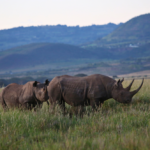
One of Africa’s newest rhino conservancies, Borana is also one of its most successful. In 2013, 21 black rhinos were reintroduced — the first time rhinos had roamed on its land for more than 50 years.
The problem
During the 1970s, rhino poaching in Kenya was intense and numbers were dramatically reduced. Today, while there are signs of recovery in certain areas, poaching continues to be a constant threat to the country’s rhinos and elephants. In addition, human population growth has left very little space for rhino populations to recover. Wildlife authorities in Kenya aim to increase the country’s black rhino population to 2,000 animals and are working with conservancies like Borana on a long-term plan to create and grow large-scale new habitats with round-the-clock protection.
However, as Kenya’s black rhino population grows, issues can arise due to the species’ own behaviour and biology. Populations that exceed 75% of a given habitat’s carrying capacity inevitably see their reproductive rate plummet. To make matters more complicated, black rhinos are naturally quite aggressive and many rhinos – particularly males – can be gored and fatally wounded by dominant bull rhinos during fights over ever-increasing demand for territory. With many of Kenya’s remaining rhinos restricted to fenced conservancies and sanctuaries, ensuring that these populations are managed at levels below the ecological carrying capacity is essential to encourage breeding and continue to increase the national population.
Laikipia’s wildlife and communities have also suffered from drought, political instability, illegal arms distribution and conflicts between humans and wildlife. Such interactions, from crop-raiding elephants to marauding lions, are common in the area and it is unethical to expect those who live alongside such difficult species to bear the brunt and tolerate them without deriving any benefit from them. Demonstrating to communities the real tangible benefits of living with and protecting wildlife and the habitat is therefore essential.
How is Borana Conservancy tackling this problem?
Together with neighbouring Lewa Wildlife Conservancy, the two formed the Lewa-Borana Landscape (LBL) when the dividing fence between them was taken down to create a combined 94,000-acre sanctuary. This event provided space to allow one of Kenya’s largest rhino populations to continue to grow. It was a huge undertaking, made all the more worthwhile when, soon after the rhinos had settled into their new surroundings, several new rhino calves were born.
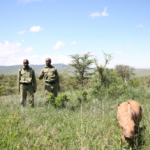
To counter the threat of poaching, investment in security including rangers is a must. Borana works very closely with its neighbours, including Lewa, Ol Pejeta and Ol Jogi Conservancies on anti-poaching issues. Borana’s rangers receive annual training courses, which include military tactics as well as first aid and other field-craft techniques that will not only lead to anti-poaching successes but also greatly enhance their safety and welfare.
Like all rhino conservation projects, the team at Borana manages and monitors the population and provides veterinary care if a rhino is sick or injured. Dams have been constructed to create new artificial water sources. This has encouraged rhinos and other species to move into habitats that have long had sufficient browse but that previously had insufficient water available. As a result, rhinos are distributing themselves more evenly across the available habitat, helping to increase the number of rhinos that the Conservancy can support, and reducing intra-species fighting.
Cattle are of huge importance to local communities dependent on livestock for the local economy. Grazing land is in short supply, and tensions amongst different ethnic and political groups can cause violent interactions. Borana is one of many wildlife havens that actively works with neighbouring communities to allow managed grazing within the Conservancy. The cattle’s dung disperses seeds and enriches the soil, while income is generated from livestock sales, both for Borana and the local herders.
Since 2005, communities have also benefited from a Mobile Health Clinic, a health care service provided by the Conservancy in partnership with the Ministry of Health, and education support for local children and adults. The Borana Education Support Programme (BESP) is intended to improve literacy levels and education amongst children in seven local primary schools.
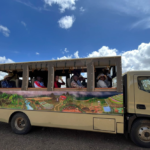
Efforts to expand Borana’s community education work reached new heights in 2022 when a new Conservation Education Programme, proudly coined ‘Mazingira Yetu’ or ‘Our environment’, was launched. This exciting new programme will deepen local people’s understanding about the importance of a healthy ecosystem for people, plants, and animals alike. A Conservation Education Centre has been constructed using an old tannery building, which includes a projection room for documentary screenings, accommodation, dining area complete with pizza oven, and a safari bus. Known as the ‘Mazingira Express’, this vehicle takes students out onto guided safaris on the Conservancy where they are taught about a variety of topics, from the importance of soil health to food chains.
Protecting Kenya's rhinos
Poaching continues to be a constant threat to Kenya’s rhinos and elephants.
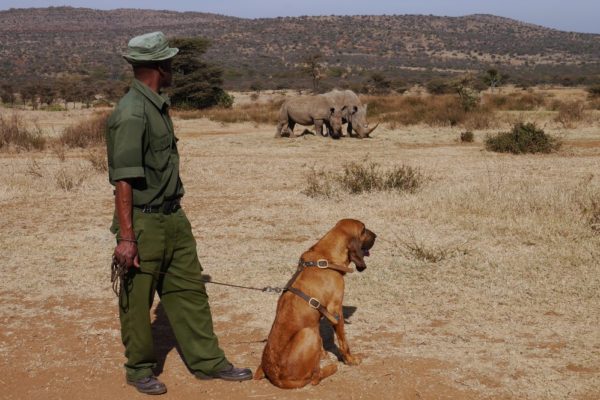
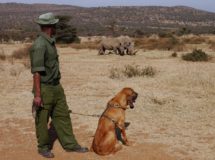
We've worked closely with the Rhino Dog Squad in Borana.
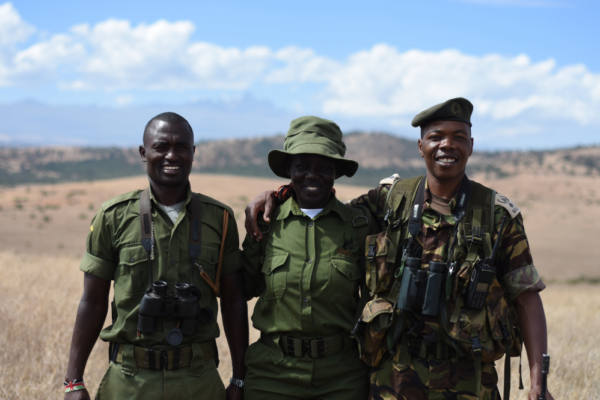
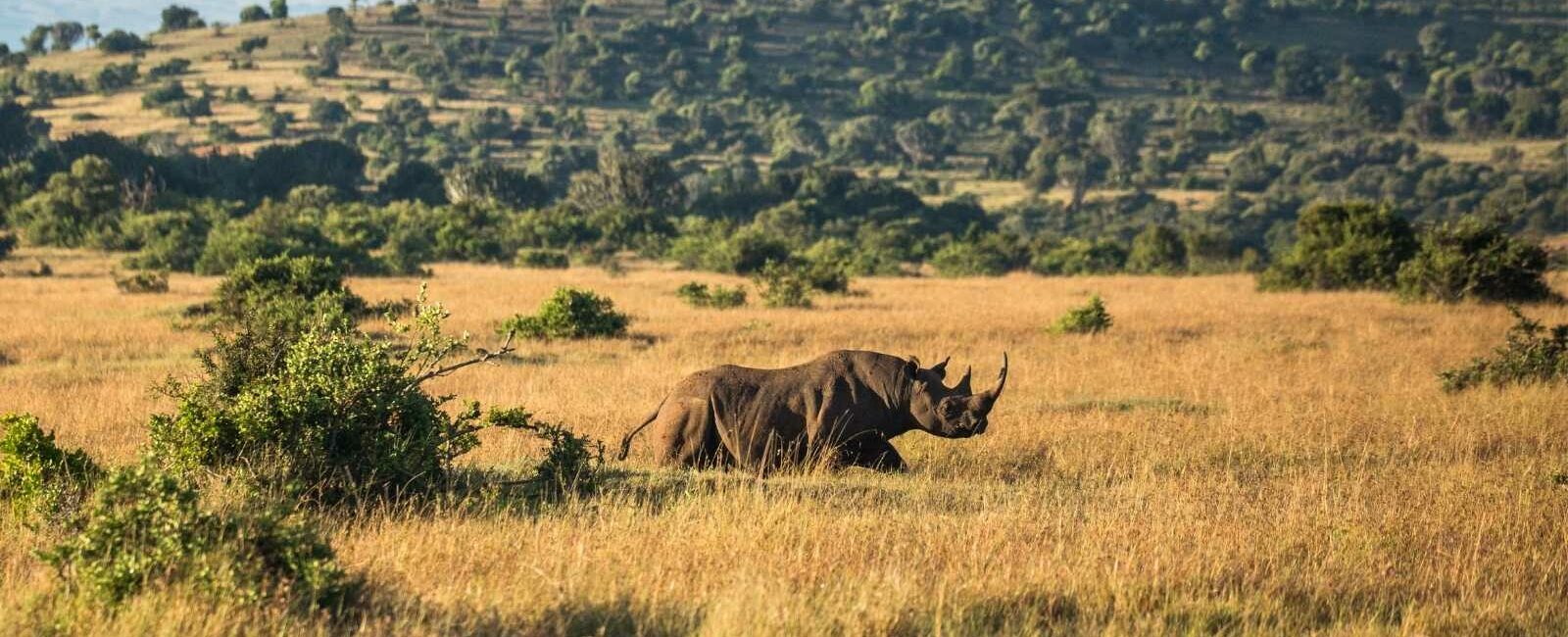
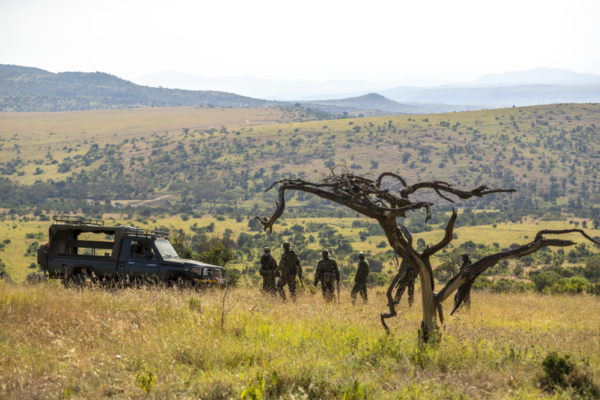
The Borana Conservancy consists of 32,000 acres of arid grassland in Kenya’s Laikipia region.
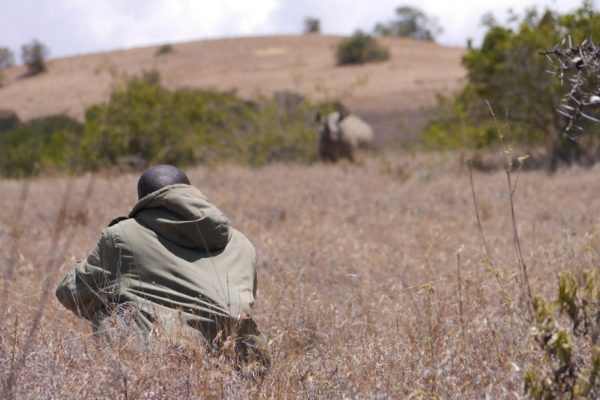
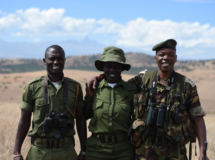
We support rangers to protect rhinos.
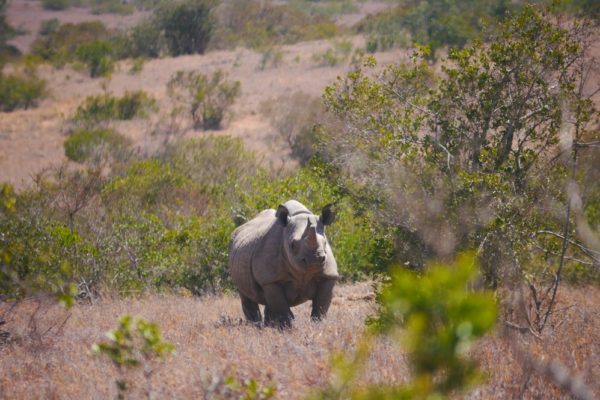
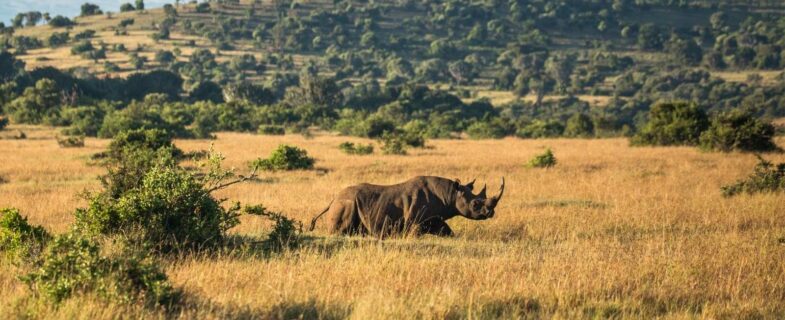
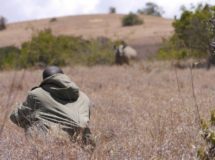
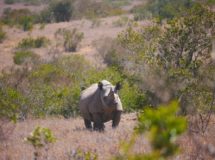
A black rhino at Borana Conservancy.
Our work
Save the Rhino International has supported the heroic work of rangers at Borana Conservancy, helping to keep rangers safe and motivated, both for their own welfare whilst working under tough conditions, and for the welfare of the rhinos they protect.
Our funds have gone towards purchasing rations and equipment for rangers – from the basics like better backpacks and boots, to training and new ranger accommodation – to provide some comfort after long days out on patrol.
We have also funded the Conservancy’s aerial surveillance and rhino monitoring activities, veterinary treatment of black rhinos injured from fighting, the Mobile Health Clinic, and the anti-poaching canine unit based at Lewa that not only helps catch poachers but has also been deployed to find lost children and stolen livestock or property.
Borana has also been a focus for Save the Rhino’s education strategy, and we have assisted with funding for school cooking stoves, rainwater-harvesting systems, and water-storage tanks. We have also been instrumental in the development of Mazingira Yetu. Our funds have been allocated towards hiring specialists in conservation education to advise on its framework, development and syllabus, purchase and conversion of the ‘Mazingira Express’ bus, and the salaries of conservation educators.
Rhino Dog Squad Appeal 2015
 Protecting Rhinos
 Reducing Illegal Horn Trade
 Involving Communities
 Bringing Experts Together